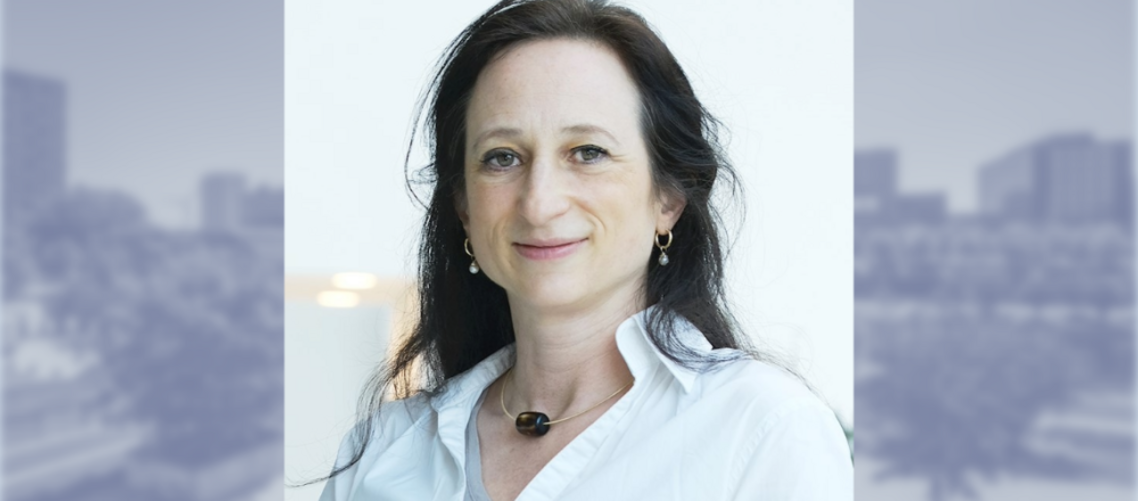
It might be hard to imagine for someone who earlier this year co-founded the groundbreaking Netherlands Women’s Health Research & Innovation Center at Erasmus MC, but Professor Jeanine Roeters van Lennep almost didn’t study medicine.
After finishing school, she headed to the UK, specifically the University of Kent in Canterbury, where she began a degree in linguistics and comparative literature. Jeanine found diving deep into something she had always been drawn to fascinating. But before long, it struck her that, as enriching as it was personally, the degree most likely would not lead to a working life that had a positive impact on society. So, after a year, she moved back to the Netherlands to start a medical degree at Leiden University and, in doing so, ignited a more than two-decade career of significant and lasting impact.
In Leiden, Jeanine focused on vascular medicine, to better shape her interest in gender and vascular damage and she is now expert in the field of gender and lipid disorders, heading up Erasmus MC’s vascular medicine clinic that specialises in hereditary dyslipidemia.
Important projects in patient care, research and education
Since joining the vascular internal medicine team at the Erasmus MC in 2010, Jeanine has initiated several important projects across the fields of patient care, research and continuing education. Among these was starting a multidisciplinary outpatient clinic for women after severe gestational hypertension, together with Erasmus MC’s gynaecology/obstetrics department. Her educational initiatives have included an annual education cycle as part of the Erasmus Summer Programme – together with Prof. Maryam Kavous, she facilitates the Gender and Health workshop for participants who travel from across the globe to attend the programme in Rotterdam.
Along the way, Jeanine has enjoyed some personal highlights, among them being awarded the VNVA’s Corrie Hermann Prize in 2015, being elected to the vice-presidency of the European Atherosclerosis Society (EAS) earlier this year (after several years serving on its executive committee) and, in November, presenting the results of the European Parliament consultation on women’s health in Brussels with Wilma Nusselder, Assistant Professor in Medical Demography at Erasmus MC’s Department of Public Health.
Recently appointed a full Professor of Cardiovascular Prevention with focus on Sex-Specific Factors at Erasmus MC, ECWO spoke to Jeanine about what motivated her to pursue medicine, what she would do to improve women’s health right now, if she had a magic wand to wave, and much more.
Do you remember when you first became aware of medicine as an important and also powerful aspect of society?
I grew up on Zeeland with a cardiologist dad and, because it was a very small community, as a child I directly experienced the impact that he had on people’s lives – whether that was when my brother and I accompanied him to the hospital and observed him visiting patients and talking to the nurses, or when we were walking through town and saw how people would stop him to remark on how he had saved their life. But seeing how devoted he was to his patients and how often he was on call on celebration days, like New Year’s Eve, initially steered me away from medicine. I guess it is notable that I now find myself happily working in the evening or on the weekend because I love what I do so much. I recognise that it might not be the case for others, but now that my children are grown up, my work is my hobby and there is always some research grant to write or educational material to prepare or patient file to ponder on that just cannot be fitted into the working day.
You work at the intersection of medicine and gender. Can you share a little of your own personal story that you can see as having influenced this?
It comes back to my dad. When I was a third-year medical student, he brought me an article from The New England Journal of Medicine about the Yentl syndrome: the fact that a woman would pretend to be a man in healthcare to be taken seriously. My father shared that he had never thought about whether gender had any influence on the way he treated his patients and, although he believed he treated all his patients equally to the best of his ability, he asked if I was interested in digging into the data to find out if that was true. So, while I was studying, I started the part-time job of maintaining and analysing a database on cardiac catheterisations on Zeeland which really stimulated my interest in gender and medicine, and it has only increased since then. Incidentally, I found no difference in treatment outcomes between women and men treated by my dad.
A passion for research
This research was a pathway in to you getting a PhD before you even completed your medical degree ….
Yes. I wrote several scientific articles on women and cardiovascular disease and, by 2001, when I was 24, it was enough to earn a PhD. I found that I had a real passion for research and that didn’t stop when I was doing my medical degree, even though, when I was training as an internist interested in preventative cardiology, the focus was very much on the clinic. I remember being told by a supervisor that I had enough to contend with, with my clinical training and life as the mother of two young boys, who were seventeen months apart, and that I should not bother with research. I didn’t listen and now I do as much clinical work as I do research!
The first centre dedicated to research and innovation in women’s health
You combine all of this in the Netherlands Women’s Health Research & Innovation Center which you co-founded with Prof. Hanneke Takkenberg and Greet Vink in March 2025. It is the first centre in the Netherlands fully dedicated to research and innovation in women’s health. Can you share with us how you connected with Hanneke, ECWO’s Executive Director, and why you started the centre?
Erasmus MC is like a little city, so I hadn’t run into Hanneke directly but had heard a great deal about her work and passion for women’s health which echoed mine. When we eventually met in person, we clicked immediately. The momentum for the Center really began early last year when Greet, the director of Erasmus MC’ Research Development Office, returned from CES in Las Vegas, the largest technology fair in the world and said ‘Jeanine, women’s health is going to be huge, even in the tech field’. At the same time, the World Economic Forum published its report on the economic effects of poor women’s healthcare. In the Netherlands alone, that costs 12.6 billion euros annually and that figure really got us moving. Greet, Hanneke and I joined forces and decided to gauge how much interest there was in women’s health among our colleagues at Erasmus MC. Through meetings and conversations, we saw that it was remarkably high so we started taking the formal steps to establish the Center. We launched with a really great event on 7 March and since then have been building on our vision which is to create a network, to bundle and exchange knowledge, to stimulate cooperation and to connect people – not only on the part of doctors and researchers, but also patients, policymakers and companies.
Girls just wanna have funding for women’s health R&I
What has the response been since you launched (wearing, we note, t-shirts that carried a powerful message - “Girls just wanna have funding for women’s health R&I”, a lovely play on the Cindi Lauper song).
We have been amazed at the response and are excited about what is emerging out of it. We have deliberately called our centre the Netherlands Women’s Health Research & Innovation Center at Erasmus MC with the idea that other university medical centres as well as (technical) universities establish similar centres. Just think what that kind of meta network could accomplish? In a nutshell, the Center focuses on advancing women’s health through transdisciplinary research, addressing biological, socio-economic, and environmental factors, and developing innovative solutions to improve health outcomes across the course of a woman’s life.
Your own approach to women’s health is based around the notion of a lifetime of health, rather than specific silos of time or health issues – and this drives the work at the Center. Can you expand on this a little?
In many ways this began in 2011 when, together with gynaecologist Hans Duvekot, I started a special follow-up clinic for women who had severe preeclampsia during their pregnancy. Research shows that these women have a more than seven times risk of cardiovascular disease and, at our outpatient clinic, we focus on prevention: maintaining health, but also early detection and treatment of, for example, high blood pressure. The research from our outpatient clinic has contributed to the adjustment of the guideline for aftercare for women with high blood pressure during pregnancy and it is a tangible example of a successful multidisciplinary collaboration that has a positive impact on women’s health. The key is breaking down the silos. We want the Center to increase the interaction between researchers and clinicians at Erasmus MC in a way that benefits women patients. My own personal view is underpinned by the Chinese proverb that states that the worst doctors cure illnesses, mediocre doctors treat patients while they are sick or at the start of their illness and the best doctors prevent patients from ever getting sick. I really get such satisfaction from working with families at the vascular medicine clinic where we specialise in hereditary dyslipidemia. There is no cure for hereditary dyslipidemia but at least you can prepare young family members for a lifestyle that prevents them from developing disease.
Beyond the "bikini view"
Why is it important to move beyond the “bikini view” of women’s health and consider things like how hormones affect health and disease?
Our vision for the Center is that it is holistic. You have, of course, diseases or conditions that only affect women but that is not only what we mean by women’s health. Alongside conditions relating to menopause or menstruation or pregnancy and breast cancer – the so-called bikini view – there are chronic diseases that affect both men and women, but differently, and these deserve as much attention as what might have traditionally been called women’s health. We also need to understand that hormones don’t just play a role in reproductive health but in many other areas of health and disease.
If you were able to wave a magic wand and change something right now regarding women’s health, what would that be?
Do you know that there is no field in our electronic patient files that enables healthcare practitioners to record whether a woman is menstruating, or in perimenopause or menopause? Asking if someone smokes is standard because it contributes to an understanding of the overall health of a person. It should be the same for women and where they are in their life cycle, as that information can be vital to a diagnosis or treatment. It can also provide important research insights. I mean it is honestly low hanging fruit. We are currently working on a project to see if we can incorporate a super simple questionnaire about this into our patient files and incorporated in the laboratory results.
You started a degree in linguistics and comparative literature. Do you still have a passion for reading books or culture, even though you switched to medicine?
I still love reading when I have the time. I am busy reading What We Can Know, the epic new book by Ian McEwan. Ian McEwen. He is a writer who I really like, and the book is just fascinating.