The five-year project aims to improve patient care by finding out how to seamlessly integrate medical imaging technologies into minimally invasive neurosurgery for better outcomes. It’s called SEamless Integration of image guidance to break down the barrierS and enhance the efficiency of Minimally Invasive and hybrid neurosurgical Care, or SEISMIC.
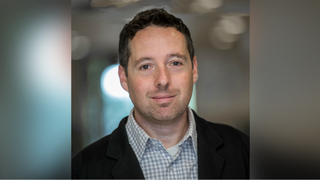
Dr Amir Omidvari is a senior lecturer, researcher, and academic director of the MSc MI Medical Business and Innovation programme at RSM. He has published research papers on economic modelling and cost-effectiveness analysis of healthcare interventions.
He will be working with colleagues Prof. Daan Stam, Professor of Leadership for Innovation at RSM and Prof. Werner Brouwer, Professor of Health Economics at the Erasmus School of Health Policy & Management at Erasmus University Rotterdam.
He said: “SEISMIC is a project to integrate image guidance systems into neurosurgery to make minimally invasive and hybrid procedures easier to perform and more efficient, ultimately improving patient care. Our role in this project is to introduce an integrated approach to evaluate and support the adoption of innovative neurovascular and neuro-oncology surgical interventions, and to address gaps in their operational efficiency, cost-effectiveness, and scalability.”
Innovation public-private partnership
The SEISMIC public-private partnership comprises nine medical technology industry partners, two patient organizations and seven academic partners:
- Industry partners: Philips, Oldelft Ultrasound, Demcon, Yaskawa, us4us, Caresyntax, Surgical Science, Boston Scientific, and Bracco.
- Patient organizations: Fundacio Ictus (stroke) and Cancer Patients Europe.
- Academic partners: Erasmus MC, Erasmus University Rotterdam, University Medical Center Utrecht (UMCU), Radboud University Medical Center (Radboudumc), Hospital Clinic Barcelona, Vall d'Hebron University Hospital, and University of Ljubljana.
The burden of neurological conditions and urgent minimally invasive treatment needs
Neurological conditions, including severe conditions such as bleedings deep in the brain (hemorrhagic stroke), chronic bleedings between the skull and the brain (subdural hematoma) and brain tumors, affect an estimated 3.4 billion people, or 43% of the world's population. They are a leading cause of ill health, disability, and overall disease burden globally. Beyond health loss, neurological conditions drive substantial socioeconomic costs, from long-term care and healthcare expenditures to productivity loss and caregiver burden, intensified by population ageing.
While there have been significant advances in the field of neurosurgery, minimally invasive neurosurgical techniques continue to lag significantly behind other surgical disciplines. Current clinical procedures rely on large skull openings, optical and electromagnetic surgical navigation systems based on preoperative imaging, and fragmented intraoperative imaging, which disrupt surgical workflows and compromise precision. The SEISMIC project seeks to transform these potentially high-risk neurosurgical procedures into safer, faster, and more accessible interventions.
SEISMIC will develop an integrated suite of technologies, including real-time surgical navigation that combines ultrasound guidance with live X-ray imaging, highly realistic simulation platforms for clinician training, and minimally invasive biopsy and treatment techniques. SEISMIC will focus on three neurological conditions in which surgery is critical to patient survival and quality of life: intracerebral hemorrhage (bleeding deep within the brain also known as a hemorrhagic stroke), subdural hematoma (bleeding between the skull and the brain), and brain tumors (where surgery is essential for both diagnosis and treatment).
Intended outcomes
By reducing procedure times, minimizing surgical trauma, and accelerating patient recovery, the SEISMIC project aims to improve clinical outcomes and expand access to specialized neurosurgical care for currently underserved populations.
EUR role in the project
RSM and the Erasmus School of Health Policy & Management (ESHPM) at Erasmus University Rotterdam are leading one of the work packages within the project, focusing on requirements, benchmarking, and health technology assessment. Their research will:
- Assess how clinical interventions in other parts of the project influence the efficiency and overall performance of operation rooms
- Evaluate the cost effectiveness of clinical interventions in other parts of the project and conduct a health technology assessment (HTA)
Identify key factors for the successful implementation and scalable adoption of the innovative interventions.
The SEISMIC website will be live soon: www.seismic-project.eu.
The CORDIS project page for SEISMIC can be accessed here. The IHI factsheet for SEISMIC can be found here.
This project is supported by the Innovative Health Initiative Joint Undertaking (IHI JU) under grant agreement No101253085. The JU receives support from the European Union's Horizon Europe research and innovation program and life science industries represented by COCIR, EFPIA, Europa Bío, MedTech Europe and Vaccines Europe. SEISMIC is funded by the European Union, private members, and those contributing partners of the IHI JU. Views and opinions expressed are however those of the author(s) only and do not necessarily reflect those of the aforementioned parties. Neither of the aforementioned parties can be held responsible for them.