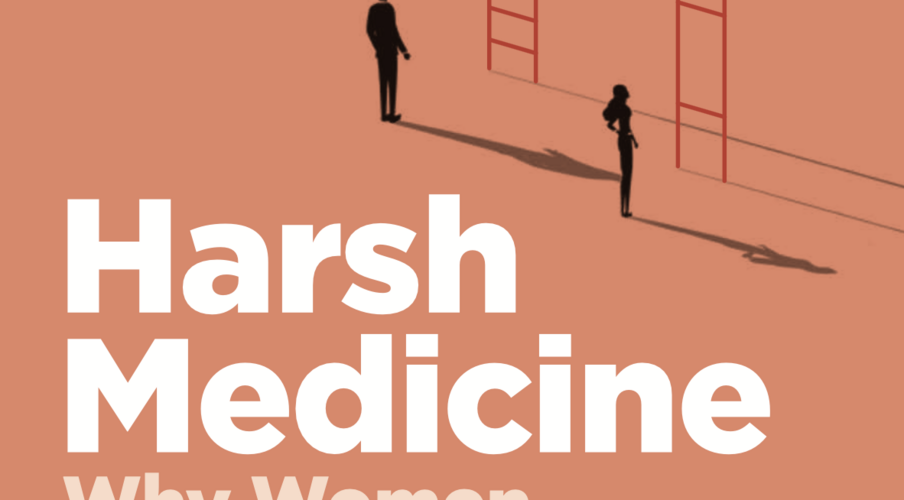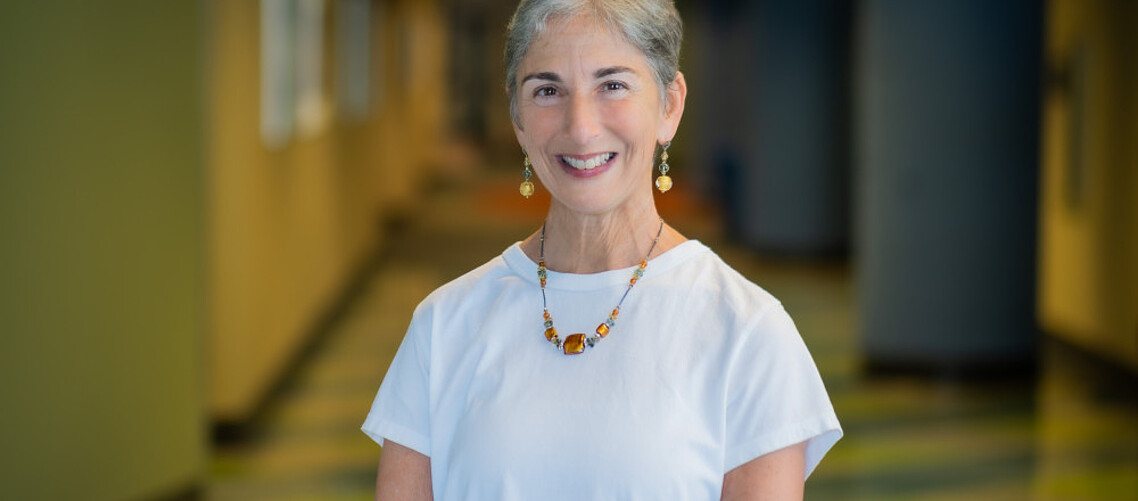
This July will see the release of a new book by Dr Jennifer Rubin Grandis, an American cancer researcher, physician and surgeon who is driven by a passion to unite people for gender equity in medicine and science.
Titled HARSH MEDICINE: Why Women Can’t Get Ahead in Science and Health Care, Dr. Grandis’s new book will be published by Johns Hopkins University Press. It is the culmination of a qualitative research study that saw the physician scientist interview over one hundred men and women in academic medicine at over a dozen institutions, focusing on the leaking pipeline of women in her profession.
Damaging effects of harassment and gender bias cannot be denied any longer
Currently the Robert K. Werbe Distinguished Professor in Head and Neck Cancer at UC San Francisco’s School of Medicine, Dr. Grandis believes that, while medicine and science are supposed to be healing professions in which we discover cures that will benefit everybody, it cannot be ignored that there are inequities in the way experts are treated and compensated. “If we are to achieve the equitable workplace we need and stop wasting talent, the damaging effects of harassment and gender bias cannot be denied any longer,” she states.
We spoke to Dr. Grandis about her book, what led her to work at the intersection of gender and medicine and more.
Congratulations on your upcoming book! Writing and having a book published is a major achievement, especially when the content is so important. Can you share a little more insight into what it is about?
HARSH MEDICINE explores why some women who on paper, should have been successful, gave up on their career ambitions because of sexism, and - or - lack of access to resources and power. Examples of this are women who were hired to run departments at universities, but when they started their jobs, they found they did not control their budgets and needed their supervisor - a man - to approve purchases and department changes. Other examples are women attempting to negotiate pay raises and title bumps only to be told they were asking for too much whereas their male counterparts in the same organisations had no issues with salary negotiations, getting what they asked for with little to no haggling.
HARSH MEDICINE has a universality for all women
A large part of the ECWO community is located in business organisations. Does the book have insight for them?
I interviewed experts in their field about what they experienced and how they successfully navigated tough work environments so although HARSH MEDICINE focuses on academic medicine and science research labs, it has a universality to it where all women, no matter what their profession or circumstances, might see themselves in these pages.
Like our Executive Director, Prof. Hanneke Takkenberg, you are a medical professional who is also driven by a desire to play a role in making the world equitable for all – especially in academic medicine. Can you take us back to when it became clear that both would be part of part of your professional life?
This passion originated more than thirty years ago when I was the only female surgical resident alongside eighteen men. I never thought about a life where I would be in a profession with so few people who looked like me. I was young so the survival strategy was to not call too much attention to it. At first, I tried so hard to fit in, which I think is typical of people who wash up on a shore, surrounded by other people who don't seem very similar. But I knew that if I was going to learn how to be a surgeon and a scientist I had to be included but it wasn’t easy. I was completely disinclined to call out my differences and any kind of signs of harassment, discrimination, or other inequities. It was also too dangerous. And even when I ultimately had my defining moment of harassment later in my career, it was still very scary to think about talking about it, reporting it, going through any kind of official process. We rely on the person being harmed, the victim if you will, to come forward with the account and then it's up to the world to believe them or not.
I am sorry to know that you experienced sexual harassment in your own workplace ...
It was really scary. But once I got through that whole experience, I realised that I had power in my voice, that the worst had happened and I had survived, and therefore I felt a special obligation to really study the problem, not to assume that everybody had my experience but to really put my experiences in context.
Being a role-model necessary but not sufficient
Why was it the right time for you to research and write HARSH MEDICINE?
We ask ourselves different questions in our late fifties and early sixties than we ask of ourselves in our twenties and our thirties. I was struck by the thought that being a role model was necessary but not sufficient. And so that really prompted me to lean into the topic because I had less fear.
Can you share a little of your own journey – were the two areas of medicine and feminism always important to you as you left your schooling?
I grew up in an academic family. My father was a university professor. He was the breadwinner in the family and was the head of the family. But my mother's journey to find her professional voice was something I had a front row seat to. She had gone to a women's college - Wellesley College – which interestingly both empowered women but also taught them to stay in their lane. When she and her friends graduated, they were supposed to be teachers or nurses. My mother hated blood, so she became a teacher. As I grew up, I watched her really embrace her passion and her identity, and become an absolute rock star in her field, albeit, as we've discussed, a field that was mostly made up of women. She was not crashing into the boy’s club or threatening anybody with taking over their power. But I saw how rich her life was because of her professional interests, how she was intellectually stimulated. She also went through psychoanalytic training, even before she got her PhD, and she wrote books. We were a feminist family and we were active in the civil rights movement and so you could say that activism was in my DNA.
Your medical journey brought you to working in head and neck cancer research and you’re currently a Professor at UCSF and an American Cancer Society Professor. What is it that drew you to working in this area of medicine?
I didn't really know anything about the field except - full disclosure - my father was a speech pathologist and so I was familiar with a lot of the language related to the clinical life that I chose. But what really happened to me is that I went into medicine wanting to help people and I honestly thought I would be an OB-GYN or a paediatrician, or maybe a psychiatrist. Then I did my rotations during my third year of medical school and I realised that I loved surgery. I never expected to love surgery. I had never met a surgeon, let alone a woman surgeon. During that rotation, I realised that there were very few women in the department – and the few women trainees that I encountered were very unhappy. Their life was hard. I knew I wanted to be a surgeon, but I didn’t want to be unhappy and I knew that I ultimately wanted to have a partner and children. So, I began to look for surgical field where there were a lot of women – and, honestly, that didn't exist. My next thought was to find a surgical field where the men seem to be very nice. And that's really how I found otolaryngology or the speciality of ear, nose and throat.
Important to know each other's stories
Why do you feel the need, perhaps it could even be described as an urgency, to keep bringing a Gender Equity lens to your work?
I have a daughter who is a pediatrician. I feel very obligated to leave the field better for her and her friends. Again, I had the realisation that having navigated my own career successfully wasn’t good enough and I had to do more. I had also noticed that women were stuck, and I asked myself why this was happening. That planted the seed for the book, and I then spent hundreds of hours interviewing people and thousands of hours coding the transcripts and analysing them and writing them into what you read in the book. I was really trying to listen carefully for people's beliefs and experiences. I realised that we don't know each other's stories, and it is important that we do. It was not unusual for these interviews to feel like I was providing some sort of therapeutic opportunity for people.
You also spoke to men during your research?
Yes - about what their role was in a situation where women give up on their career ambitions. Occasionally some would say to me, what can I do? And I would reply by asking when was the last time they had asked a female colleague or trainee about her experiences? The answer was “never”. Personally, I have many wonderful male colleagues, and many are my friends. But I can’t think of a single time where we've sat down, even over a beer, and they've said to me, “I notice that you are the only one in the room. What is that like for you?” I would like men to read the book and not be defensive. The stories they will read in the book are heartbreaking in some ways and implicate them as someone with power.
Do you have some parting words about your book?
Large numbers of skilled, highly trained women go to work every day in the United States. They are very good at their jobs and bring passion to what they do. And yet, once they get to work, many of those same women can expect to face a numbing routine of behaviours that belittle them and dismiss their expertise. These women have to work hard to be taken seriously, and they often find that their path up the career ladder is slowed down or blocked for reasons that are not explained to them. Some of them even leave their profession because of these frustrations. HARSH MEDICINE offers resources and solutions, and gives readers hope that we still might be able to shock the system and effect great change in the workplace, making it more egalitarian for women and men alike.
Dr. Grandis regularly shares her thoughts, recommendations and insights on LinkedIn. A recent post, titled “What I wished I’d said as a working mother”, offers this important insight:
“For much of my career, I believed that to be taken seriously as a surgeon and scientist, I needed to keep parts of my life separate. Motherhood was one of them. Looking back, I wish I had said more. Not because it was easy, but because it mattered. To acknowledge both the challenges and the joy of raising children while building a demanding career. To model that it is possible, even when it feels overwhelming. Recently, a conversation with a younger colleague reminded me how quiet we once were about these realities, and how much that silence shaped the culture we inherited and, at times, reinforced. Working mothers in medicine should not have to hide. There should be space for honest conversations, shared experiences, and mentorship that recognizes the whole person. If we want to support the next generation, we have to say out loud what we once kept to ourselves.”
You can follow Dr. Grandis on LinkedIn here, pre-order her book on Bookshop.org or Hopkins Press and find out more about HARSH MEDICINE here.