Bolton opened with a sobering assessment. While clean and renewable energy has grown significantly in recent years, global CO2 emissions and atmospheric concentrations continue to rise. That tension between visible progress and the scale of the climate challenge framed the discussion throughout the day. The seminar made clear that sustainable finance is no longer a specialist concern but sits at the heart of how economies, companies and markets respond to climate risk and long-term value creation.
A central theme in Bolton’s remarks was corporate responsibility. Businesses, he argued, cannot focus solely on financial returns while ignoring the broader consequences of their actions. If the impacts of business decisions are known, then responsibility for those impacts cannot be treated as optional. In that sense, sustainable finance is not just about regulation or investment strategy, but also about how companies understand their role in society.
Shifting from ambition to implementation
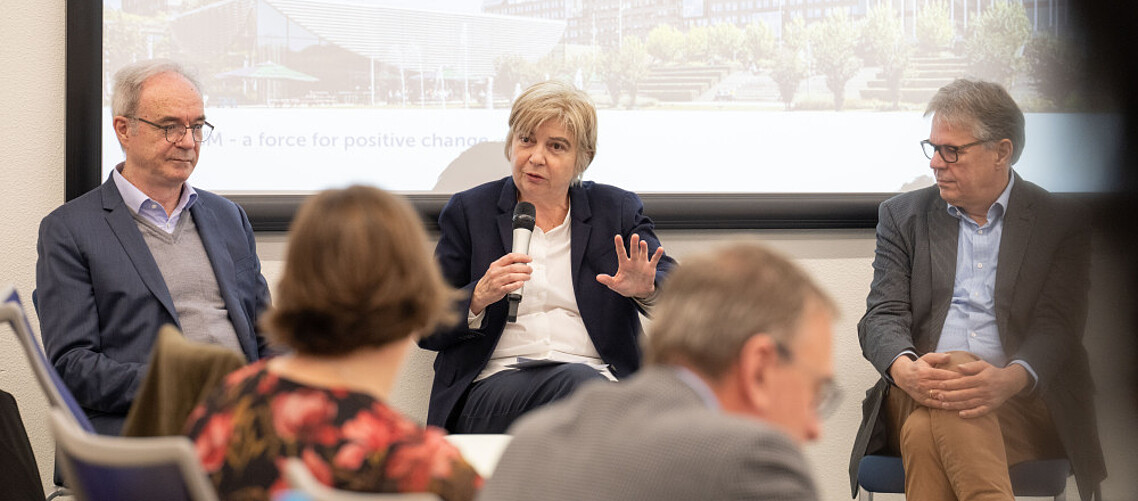
The panel discussion broadened that perspective. Participants noted that regulation often moves more slowly than the problems it is meant to address, which means investors, institutions and academia must show leadership. Innovation, incentives and the direction of capital all matter if the transition is to accelerate. The conversation also touched on the language of sustainability, with panellists suggesting that labels may matter less than whether organisations are genuinely building resilient, future-facing business models.
What stood out most during the seminar was that the debate around climate finance has entered a different phase. Ten years ago, much of the focus was on ambition and commitment. Today, the emphasis is increasingly on implementation, accountability and the practical question of how capital can support transition at scale.
That makes conversations like this one especially timely, not only for finance professionals, but for anyone concerned with how economic systems can contribute to a more sustainable future.