Financing innovation out of necessity
In the first paper, Dr Madertoner examined the earliest convertible bond issues in the Netherlands, showing that Dutch firms adopted convertible bonds primarily when traditional funding sources ran dry. Convertible bonds reduced investor risk yet preserved managerial flexibility, spreading through networks out of practical need rather than theory.
This research shows that hybrid financial instruments can bridge financing gaps when markets tighten, especially for high-risk or innovative ventures such as technology or infrastructure projects. For emerging economies, this offers a path to deepen capital markets and channel investment where banks and equity funding remain constrained.
When governance decides survival
In his second study, Dr Madertoner analysed 196 Dutch exchange-listed corporations that terminated between 1903 and 1996 to explain why firms ceased to exist. This analysis revealed a decisive shift: before WWII, most terminations were voluntary liquidations initiated by shareholders, while after the 1960s creditor-driven bankruptcies dominated. This change marks the evolution from shareholder-centred to stakeholder-based corporate governance.
These findings resonate with modern ESG (Environmental, Social, and Governance) debates, by showing how shifting governance priorities influence not only who controls decision-making but also how companies endure or collapse. This historical lens helps today’s policymakers and investors grasp the long-term effects of giving more weight to creditors, employees and society alongside shareholders.
Challenges of purposeful leadership
Dr Madertoner’s third paper traced the fate of the Leerdam Glass Company from a historical business case to show how a company that prized craftsmanship and employee welfare, eventually struggled financially amid industrial change. The case study highlights how purpose-driven leadership can generate social value and reputation but may strain adaptability and competitiveness. It underscores that sustainable leadership requires a balance between social ambition with financial rigour – a lesson especially relevant while modern firms of today pursue both profit and purpose.
By combining historical analysis with modern insight, Dr Madertoner’s research connects nineteenth-century finance to twenty-first-century corporate dilemmas. It reminds us that while markets evolve, the tension between innovation, governance and purpose remains constant, and that understanding this balance is crucial for building resilient, responsible businesses today.
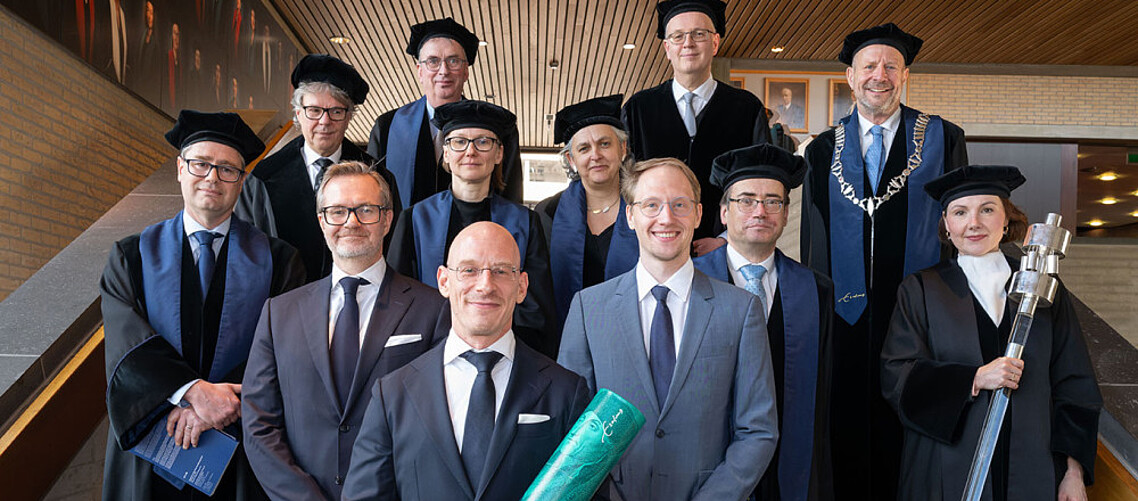
Dr Madertoner defended his dissertation on 26 February 2026 at Erasmus University Rotterdam (EUR). His promoters were Prof. Abe de Jong of EUR and Prof. Peter Rossenboom of RSM. The Doctoral Committee included: Prof. Tine de Moor, Prof. Marno Verbeek and Prof. Dirk Schoenmaker of RSM, and Dr Richard Paping from the University of Groningen.