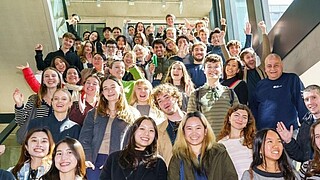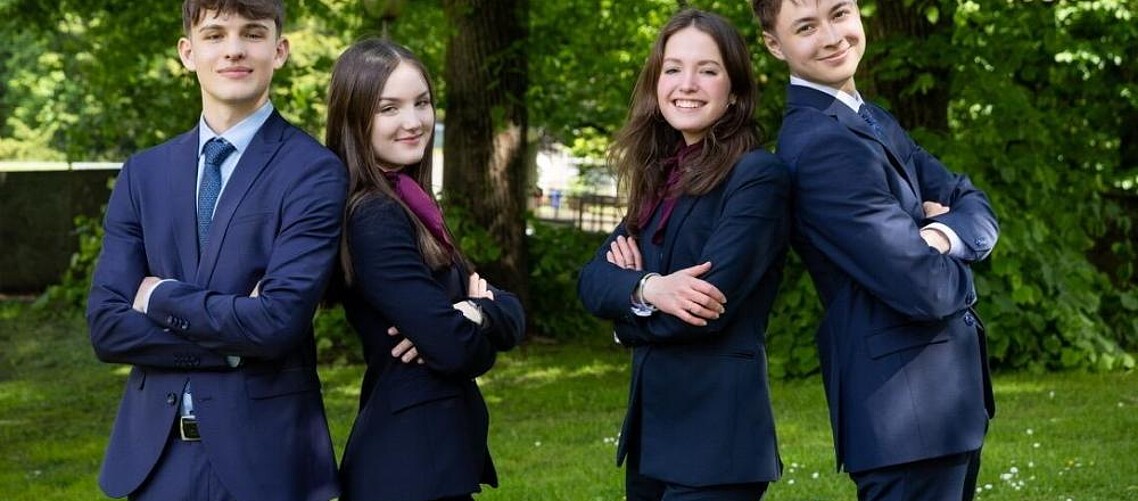
The competition had two sixteen-hour cases – one of which included a visit to the company at the centre of the challenge. Competitors worked through the night to devise their solutions to each of the business challenges, and created twenty-minute presentations to convince the judges, and then faced ten minutes of questions.
The first case came from Canon Production Printing. The teams were asked to solve a real operational challenge inside this world-class company, but first were invited to walk Canon’s factory floor. “It made the problem tangible in a way no case brief ever could,” said RSM team member Nicholas Cirje.
Unfamiliar territory
The second case from Nationaal Programma Heerlen Noord was a strategic challenge directly connected to the region – Maastricht in Limburg in the Netherlands. “It’s a 25-year Dutch government urban revitalisation initiative, a topic none of us had encountered before in a case setting. Unfamiliar territory, but that's exactly what made it exciting,” commented Nicholas.The Heerlen Noord Programma is intended to fix problems such as unemployment in the region by finding workers for jobs and jobs for workers – but does not create employment or business for itself. The RSM team presented their idea for an entrepreneurship programme with education for entrepreneurs, and help through every step of building a business, plus deep involvement with the community.
Intense finaleThe finale of the competition stepped up the intensity with another case question based on the second case from Nationaal Programma Heerlen Noord. The teams had only ninety minutes to prepare their additional proposals for encouraging the region’s new entrepreneurs to stay in Heerlen Noord, and present them in a five-minute pitch. The RSM team’s proposal was to use the strong sense of community created with their proposed entrepreneurship programme in which the entrepreneurs give back to the community as well as being helped by the community.
As a result of their efforts, the RSM team has been invited by representatives of Nationaal Programma Heerlen Noord to visit again and to pitch their entrepreneur-retention proposal directly, says Rebecca Armando, Competition Manager for RSM STAR Case Club.
Clarity of the messageThe winning strategy for the RSM team relied on not only excellent information, but also a polished presentation. “The biggest lesson I'm taking away from this week is that ideation and strategy will only get you so far. A room full of judges has seen hundreds of smart ideas, so what truly cuts through is the clarity of your message and the conviction behind it. Delivery, digestibility and the chemistry you carry into that room are what separate good teams from memorable ones. Putting yourself in your audience's shoes, making hours of strategizing feel simple to follow allows your ideas to make more than sense, it allows them to land and resonate,” said Nicolas Cirje in his post on LinkedIn.
What are case competitions?
The format for case competitions is familiar for each round, but the subjects can be very different. Case competitions allow teams of the most talented bachelor students around the world to engage with corporate business by developing and presenting innovative solutions to real-life business challenges. The competitions usually last for about a week and involve teams of students travelling from all over the world to a particular university. Within that week they are presented with two or three business cases which they have to solve in a limited time. Teams usually don’t know what the challenge is until the competition begins. They solve real-life business cases that are written by company professionals and focus on a problem that an organisation is facing. The next case competition for the RSM STAR Case Club team is at Thammasat Undergraduate Business Challenge Case Competition (TUBC) at Thammasat Business School, Thammasat University in Thailand from 5-11 October 2026.