Article: Friday, 24 April 2026
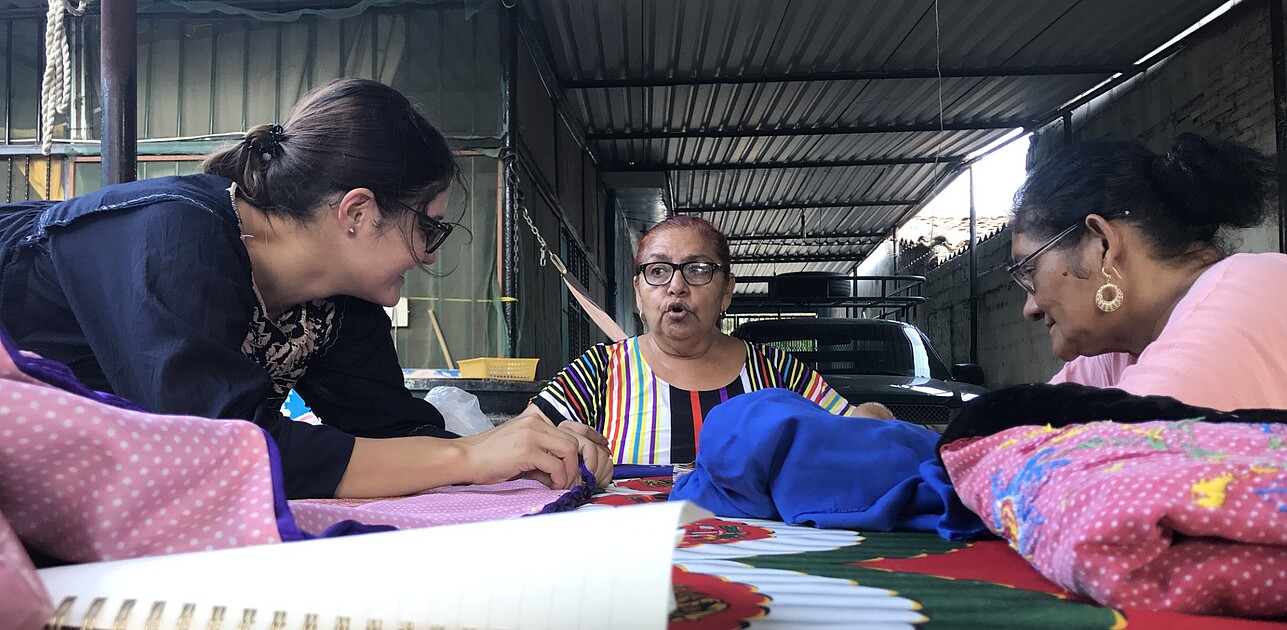
Photo credit: Paola Velasco Herrejón
Wind farms, water projects and climate-smart agriculture are expanding across Indigenous and local lands. Community participation is now common. Yet many projects still spark resistance or reproduce inequality. In his study When Participation Isn’t Enough: How to Build Fair Sustainability Partnerships, Thomas Bauwens shows why: participation does not mean shared power. He presents a framework to show who controls knowledge, decisions and benefits in sustainability projects — and how partnerships can become fairer and more durable.
On a windswept plain in southern Mexico, members of the Zapotec community of El Espinal gathered to discuss a proposal that promised clean energy, jobs and development. Wind turbines would rise on their communal land. Assemblies were held. Agreements were signed. Participation was promised. But when the turbines started turning, it became clear that participation did not mean control. Technical decisions had already been made elsewhere. Contracts were written in legal Spanish not everyone fully understood. Revenues flowed outward. “Participation without shared decision-making can reproduce inequality, even in projects designed to solve global challenges,” says Bauwens.
As the green transition accelerates, sustainability innovation increasingly unfolds where different knowledge systems meet: engineering expertise, scientific models, Indigenous stewardship and local practices. Bauwens and his colleagues set out to understand what happens when these worlds come together — and why well-intended participatory projects can still fail.
Their main contribution is a typology of four recurring collaboration modes. The key difference between them is not whether participation exists, but who holds real decision-making power. “Our main insight is that sustainability projects succeed not only by deploying green technology, but by sharing power, knowledge, and benefits fairly,” Bauwens explains.
Bauwens distinguishes four broad modes of engagement.
In extractive projects, local or Indigenous knowledge may be acknowledged, but ownership and key decisions remain external. Communities are consulted, yet they have little real influence over long-term governance or economic returns.
In parallel arrangements, knowledge systems coexist but barely interact. Engineers and communities operate alongside each other, without genuine co-design or shared authority.
Adaptive partnerships go a step further: actors learn from one another and adjust their approaches to make collaboration work. Cooperation improves outcomes, but ownership and governance structures largely remain unchanged.
Only in transformative collaborations do partners jointly redefine both the problem and the solution. They share decision-making, ownership and governance. Such projects remain rare, but they tend to produce more legitimate and durable results.
The research shows that many sustainability initiatives fail not because participation is absent, but because decision-making power remains concentrated. Projects often ask: who are the stakeholders? How do we secure buy-in? But deeper questions determine legitimacy: who defines the problem? Who controls design decisions? Who owns the assets? Who governs long-term operations? “When one group answers most of those questions, participation becomes superficial,” Bauwens says. “The green transition must be socially just to be sustainable.”
Even strong partnerships can get stuck because of structural barriers. Short funding cycles leave little time for trust-building. Procurement rules demand standardised designs. Infrastructure regulations often favour major market players. In such contexts, community ownership models struggle to scale, even when local collaboration is strong.
The framework is designed as a diagnostic tool for business leaders, NGOs, investors and policymakers. It invites them to assess their own initiatives and identify where power truly sits.
Several practical lessons stand out:
Free, prior and informed consent should allow communities to shape or refuse projects before designs are finalised.
If communities contribute land, labour or knowledge, they should share in revenues and governance.
Long-term engagement and co-learning create the foundation for durable collaboration.
Joint boards or community assemblies should have real decision-making authority.
For businesses, this may require rethinking timelines and risk models. For governments, it may mean adjusting procurement and regulatory frameworks. For NGOs and social enterprises, it means treating power-sharing as a core design principle rather than a communication strategy.
In the rush to accelerate climate action, speed and scale often dominate the conversation. This research suggests that long-term success depends on something less visible but more decisive: who holds power once a project begins. “Sustainability projects succeed not only by deploying green technology, but by sharing power, knowledge, and benefits fairly,” Bauwens says.



Science Communication and Media Officer
Rotterdam School of Management, Erasmus University (RSM) is one of Europe’s top-ranked business schools. RSM provides ground-breaking research and education furthering excellence in all aspects of management and is based in the international port city of Rotterdam – a vital nexus of business, logistics and trade. RSM’s primary focus is on developing business leaders with international careers who can become a force for positive change by carrying their innovative mindset into a sustainable future. Our first-class range of bachelor, master, MBA, PhD and executive programmes encourage them to become to become critical, creative, caring and collaborative thinkers and doers.