Arnout de Boer
Nationality: Dutch
Job title: Asset Engineer
Previous degree: MSc in Offshore and Dredging Engineering from TU Delft
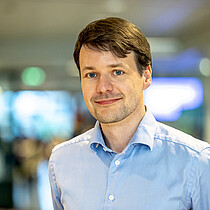
Why did you choose to go back to school for an MBA? And why did you choose RSM?
I found during my career that I am more attracted to general management challenges than in-depth engineering work. This way I can have more impact and work on broader topics. As I had no formal training in anything but engineering, the MBA programme enables me to be better prepared and equipped to take on these challenges.
RSM is the leading business school in the Benelux and one of the best in the world. The RSM focus on the UN Sustainable Development Goals and its hands-on approach matched what I was looking for in an MBA.
How is the Executive MBA preparing you to do business in an uncertain world?
During our study trip to London, I was surprised by the impact that climate change had on investment. People were assessing increased risk of things like mudslides and floods on physical assets. Seeing first-hand how climate change is affecting investment decisions, and discussing how to handle risks related to climate change as a company, was eye-opening.
On a more positive note, we also visited the European Bank for Reconstruction and Development and saw how financial institutions can improve living conditions and reduce climate change risk for people in developing countries.
How would you describe your RSM EMBA experience so far?
Before the start of the programme, I was expecting many of my fellow students to be wannabe-bigshot managers, and wasn't sure if I would fit in. I was surprised and happy to find that the EMBA students of my cohort are very nice, friendly people. Exchanging experiences from different industries, backgrounds and cultures keeps my mind open and helped me learn so much. This is on top of an already excellent programme with top-notch teachers and very interesting (but demanding) courses.
What has been the most inspiring or challenging assignment or course during the EMBA so far? How did it challenge you?
In our marketing classes, our grade depended on performance in a simulation in which our team ran a fictional company that competed against other student teams. The market size was limited and competition fierce. The competitive nature was unlike anything else I had ever experienced in academia, even though it is common in business. Our team worked hard and I gained a deeper understanding of marketing, but also of time management, teamwork, strategic thinking and many other things I hadn’t expected.
How have you applied new knowledge and skills from both inside and outside of the classroom in your current role?
I had not received any training in negotiation before my MBA, but I am sometimes asked to join our procurement department as a business representative in talks with suppliers. During our MBA programme I got hands-on training in negotiation. This training deepened my understanding of what was going on, but it also changed the way I present myself in these meetings, the questions I ask and how I prepare. I am confident this will lead to better business outcomes in the future.
What impact does the Personal Leadership Development (PLD) component of the programme have on you?
Personal Leadership Development is not a 'hard' subject but one of the softer components of the programme. I am happy that it forced me to reflect on my life and the person I have become. The biggest difference is that I am now more aware of my own strengths and pitfalls. I will use this knowledge when looking for new opportunities, better understanding not only which projects to take on board but also when I should ask for help.
How are you planning to create impact through business or in your organisation?
I believe that more capable leaders can make everything better, from shareholder returns and company growth to employee satisfaction and community welfare. I will apply my skills and learnings to contribute to energy availability, which is a major problem for many people not living in developed countries, while reducing impact on climate.
What has been the highlight of the EMBA experience for you?
My cohort consists of very talented, ambitious and interesting people. As everybody has professional experience already, there is a lot more interaction between the class and professors, and people can explain from their own experience. This is something I didn't expect and is very different compared to the university education I received after high school. I always look forward to seeing my fellow students (and the professors) again. Every day of studying, I leave RSM with new ideas or insights.
How have you utilised the alumni network so far?
To be completely honest I haven’t leveraged the alumni network a lot. Studying next to work is quite demanding, and I already learn a lot from the professors and students I interact with regularly. This is something I intend to pick up after graduation. I did, however, apply to the Energy Transition Network and am looking forward to connecting there.
Has your MBA journey changed your outlook on your career? If so, how?
Yes, before starting my RSM, studies I believed I should just try to go up in my career and not think too much about the details. Various discussions and sessions have given me a much more nuanced outlook. I value whether a job is a good fit to my skills and talents. Job satisfaction is more important than the precise position on the company ladder. I now believe that this approach is better for long-term success.
How is an EMBA from RSM setting you apart from your colleagues and peers?
I can look more broadly than my own discipline. For example, my training in finance allows me to challenge gut feelings about what is the right thing to do, or to make a persuasive case on the value of certain initiatives. This prevents good initiatives from getting stranded because we cannot explain the value correctly.