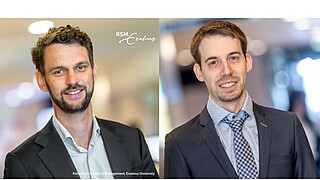
The innovative VR teaching case The Logistics Cluster: Organizing Chaos in Humanitarian Logistics is an evolution of the ‘physical’ teaching case published by Dr De Vries and Prof. Besiou in 2023. “The case lets students play the role of a humanitarian logistician,” says Dr. De Vries. “It tasks students to coordinate the logistics in the aftermath of a sudden-onset disaster, working under time pressure, information gaps, with limited resources and with many humanitarian organisations counting on them for accurate information updates and logistics solutions.”
Making the management of humanitarian logistics ‘real’
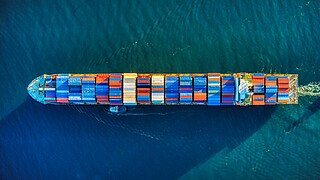
Humanitarian logistics involve the maintenance and resilience of key supply chains for humanitarian purposes – for example, to deliver essential supplies of medicines, food and other life-saving supplies to those in need, despite chaotic conditions engendered by such circumstances as collapsing governments, broken infrastructure, and war. The subject is taught at RSM in a master programme and in shorter executive education programmes, as well as in the master-level electives Humanitarian Logistics & Supply Chain Resilience and Health & Humanitarian Logistics.
VR experience is more dynamic
While the physical case has been run many times by both Harwin and Maria in their humanitarian logistics courses as well as at dozens of other schools which have downloaded or purchased the case, the VR simulation gives students and teachers a more dynamic and heightened experience.
The case focuses on a scenario of disaster relief. Students face time-pressure, lack of information, contradicting needs of various stakeholders, and unforeseeable events that require an immediate change of course. Students learn by trial-and-error and through reflection on their mistakes over the 4-10 hours it takes to complete several phases of the operation.
“The VR version of the case lets students virtually enter a location where the coordination takes place, and where they are approached by different humanitarian actors with their requests updates and offers – they are literally able to see and experience humanitarian logistics,” says Harwin.
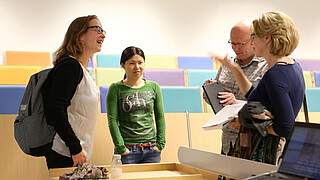
Students, working in small groups wear VR headsets during the case; their teachers have the opportunity to assign different conditions, limitations, parameters or criteria to each group so the whole class doesn’t have the same experience; they all get a slightly different exercise to work on. No one-size-fits-all here. Students have found the case – which takes 4 to 10 hours to run – especially engaging, with comments like “the highlight of the course was the simulation” and “the simulation was very successful in conveying the complexity of the topic.”
Academics who have delivered the case describe the experience: “Instead of the traditional ‘read-discuss’ of a case, the students enter this crisis setting with another angle: ‘experience – decide – defend’.” The innovative and immersive VR environment, further, “allows for a dynamic experience that brings problem-solving learning to the next level.”