Impact investing is not a new idea in the world of sustainable finance; but it has reached a new level of maturity and is poised for broader deployment. Academic theory – much of it led by RSM’s researchers – is now supported by empirical theory, with practical approaches, measurable advances, entrepreneurial experience, and proven strategies. All of this makes it possible to make investing for impact actionable, and bringing with it positive social and financial benefits alongside a financial return.
Where purpose meets capital
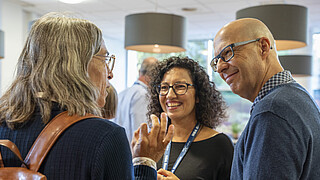
As emcee Ashay Vishnoi opened the event, the atmosphere buzzed with purpose and possibility when representatives of mission-driven startups, founders, students getting ready for the competition, alumni, impact investors, and academic leaders converged for a day dedicated to exploring how ventures can drive meaningful change.
Economist and social entrepreneur Marcello Palazzi (RSM MBA 1994) is one of the most enduring and inspiring voices in sustainable business models and finance. He opened the day’s programme with an inspiring speech, sharing his journey of translating bold visions into viable ventures. He spoke about securing capital and candidly discussed the inherent challenges of scaling impact-driven enterprises. His credentials include co-founding B Lab Europe, a non-profit organisation that serves a global movement of people using business as a force for good; the NOW Partners Foundation that helps organisations in many sectors to develop and implement their innovations; and For Good Leaders that is creating a global cooperative of thousands of leaders for good.
Marcello talked about the conditions for a collective experience for certified B Corporations – these are businesses that are verified to meet high standards of social and environmental performance, transparency, and accountability. Addressing the current landscape for environmental, social, and governance (ESG) investing principles, his perspective is that "to meet this challenge, the entrepreneurial mindset is the most effective."
The qualities of a founder
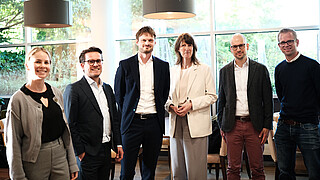
A panel discussion on ‘What makes a startup impactful?’ brought out perspectives on the qualities of a founder, funding strategies, and the complex challenges of scaling with purpose. The panel made clear that sometimes the most powerful change comes from focusing on something small and doing it exceptionally well. The panel brought together leaders alongside two entrepreneurs actively making impact through their businesses. The discussion explored what truly defines an impactful startup, weaving together perspectives on founder qualities, funding strategies, and the complex challenges of scaling with purpose Leaders were Laura Rooseboom, co-founder and managing partner at StartGreen Capital; Nicole Keating, an impact analyst at climate technology venture capital organisation World Fund; and Karin Müller, co-director of Ashoka Netherlands that supports social entrepreneurs who said that beyond compliance issues, there’s a fundamental structural problem: "We've seen that entrepreneurs are operating somewhere often fragmented and small scale when it comes to capital and there's a mismatch between investors who are hungry to participate in ventures that are working to make change." Her solution involves forming systemic portfolios that allow organisations to move toward investing in the portfolio as a whole. Throughout her discussion, she emphasized that "passion is required" to navigate these challenges.
Entrepreneurs were Khaled Shaaban of Subul Impact Outsourcing, who brought an important perspective of what comes before financial capital. He discussed the value of social capital and connection when embarking on a startup venture. “To get to the financial capital, the social capital is the fruitful path,” he said. “Once proper funding is secured, founders gain the peace of mind to focus on their venture.” Entrepreneur Alysa de Haas of tree-saving innovators Leaf.it said: “The Impact Summit was truly inspiring and full of fresh energy! It proved that young entrepreneurs can play a big role in shaping meaningful impact and have a real seat at the table when purpose meets capital. I am excited to see how future editions keep turning ideas into action.”
Defining and pitching investment for impact
Breakout sessions delivered skills in impact pitching, metrics, and ecosystem building, and were led by experts from impact-oriented organisations.
In a workshop titles ‘What do we mean by impact in investing?’, Roland van Keeken, Impact Investing Lead at the non-profit Impact Institute, facilitated a deep dive into the complexities of measuring and understanding impact in the investment world.
Workshop leader William Vuijk, venture lead at Rotterdam circular economy hub BlueCity, led workshop participants through the art and science of transforming vision into investment through effective pitching.
Start-up showcase
Mission-driven entrepreneurs took their place in the spotlight to present their innovative solutions to a distinguished panel of impact investors. These early-stage ventures demonstrated how they were tackling pressing social and environmental challenges, and their pitches were met with thoughtful questions and genuine interest.
Co-creating Erasmus University Impact Ecosystem
Lila Frisher, Founder and President of Maas Impact Ventures convened a collaborative roundtable session with students, faculty, alumni, and ecosystem partners to envision and strategize ways for RSM to strengthen its impact ecosystem. The advantages of being a part of Erasmus University Rotterdam include its culture of intellectual curiosity, its partnerships and alliances (for example with TU Delft and Erasmus MC), and a strong network of engaged alumni. Roundtable attendees agreed that the foundation for impact entrepreneurship at EUR and within Rotterdam is already strong. Panellists were Ernst Hoestra of Erasmus Enterprise, Anuj Kantilal Tater of RSM, Josie Roberts of student-led advisory initiative Maas Impact Ventures; Adriano Michieli, venture capital investment analyst with Graduate Ventures; and Luis Eggert of social start-up incubator at Erasmus University Rotterdam, Enactus.
Summing up Day 1 of the first-ever Impact Investing Summit, Marcello Palazzi said he was impressed by the Rotterdam impact ecosystem that is beginning to take shape, and as an alumnus he was proud of RSM’s imagination and leadership in this area. “The University could become a living lab for positive economic impact in the Rotterdam area and beyond, given its global reach. I look forward to the next steps!” he said.
11th annual Impact Investing Competition
The RSM Impact Investing Competition is well-established, having been started by RSM MBA students back in 2014 – unlike the newly-launched Impact Summit, spearheaded by Maas Impact Ventures’ Niloofar Khanjani, on the previous day.
The best and brightest MBA students from around the world are invited to participate, and asked to devise investment strategies that prioritise sustainable value creation for positive impact.
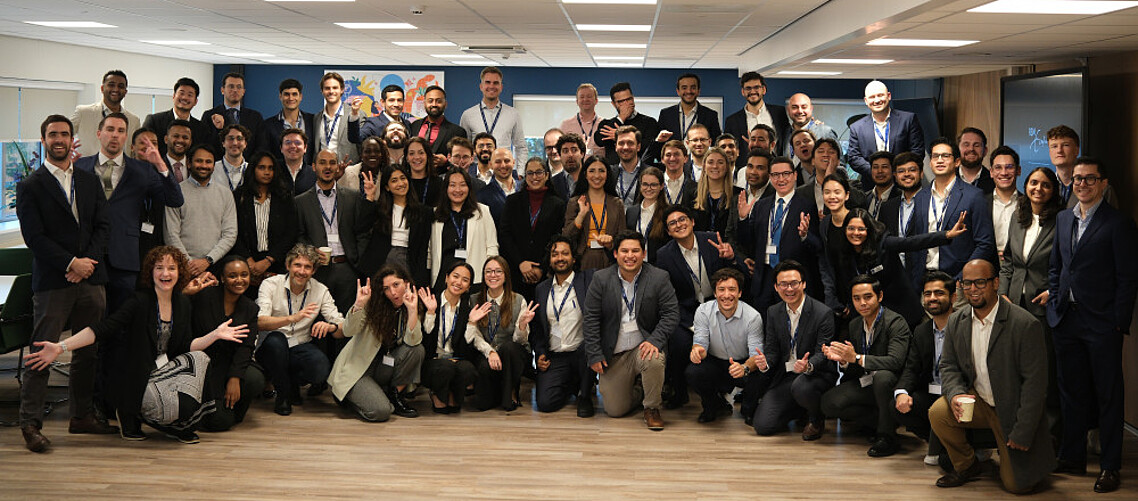
Around 75 MBA students formed teams from RSM, ESADE Business School in Barcelona, University of Amsterdam, IE Business School in Madrid, Copenhagen Business School, Imperial Business School in London, University of St Gallen in Switzerland, WHU Otto Beisheim School of Management in Vallendar near Düsseldorf, and TIAS School for Business and Society at Tilburg University and Eindhoven University of Technology.
The teams were notified 10 days in advance of the competition date to prepare and develop a financing and commercial strategy for Stegra, a pioneering start-up aiming to produce fossil-free steel using renewable hydrogen technology. The project targets cutting steel CO2 emissions by 95 per cent and achieving commercial production by 2027. The case was co-developed with ING Bank by RSM MBA students Lucrezia Fruli, Joel Vargas Sanchez, Prapthi Shanthanna and Astrining Diyanti.
In the afternoon the participants took part in a business dilemma presented as a game developed by ING, immersing them in a real-life sustainability challenge that required balancing commercial decision-making with environmental, social, and reputational risks across multiple stakeholders in emerging markets. This dynamicevent was organized by a team of 15 RSM MBA students led by Erin Paglione.
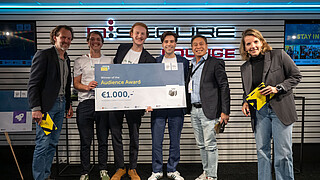
After the presentations on competition day, ESADE took the top honours, including a €5,000 prize. MBA candidate Danielle King from the ESADE team said, “The competition pushed us to think differently by bridging traditional practices with new approaches in developing our recommendations. The case touched on each aspect of the stakeholders involved and how they each viewed the ESG impact. Beyond the case itself, the best part was being surrounded by an inspiring group of panellists, participants, and organisers who made the experience truly memorable.”
The University of St Gallen were placed second, and IE Business School from Madrid were third.
Peter Kindt, Global Head of the Transition Accelerator at ING, expressed the feelings of the jury: “It is super inspiring to see a group of students spending 10 days on such a complex case – and hearing their energising ideas was really incredible. They’re doing in 10 days the work that financial advisors do over multiple years.”
Jury members were
• Bing Court (MBA2023), Impact Officer at Dutch entrepreneurial development bank FMO
• Carolina Echecopar (MSc Finance & Investments), Investment Manager at Carbon Equity
• Eduardo Linage Muños, Investment Analyst at Rabo Partnerships
• Lucía Vela (MBA2024), Investment Associate at Infinity Recycling
• Miguel Tamayo Maertens (MBA2018), Head of Investments at IDH Investment Management
• Nicolas Neuhaus, President of the Board Perú investment management
• Nicole Keating (BScIBA2021), Impact Analyst at World Fund
• Noémie Metz-Vinez (MSc Global Business & Sustainability), ESG Analyst at Columbia Threadneedle Investments
• Peter Kindt, Global Head of the Transition Accelerator at ING
• Dr Solomon George Zori, Assistant Professor of Accounting and Valuation at RSM
• Thomas Alma, co-founder of impact investment fund Vliegwiel Impact