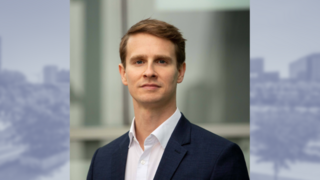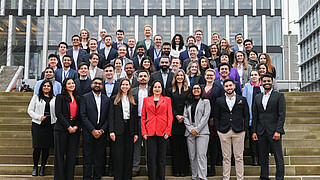
The audience joined in the discussion of ‘what country are you most afraid of?’ and ‘what is the biggest threat to geopolitical stability?’ to begin, followed by a keynote presentation by research fellow and EU expert Diederick van Wijk from the Clingendael Institute.
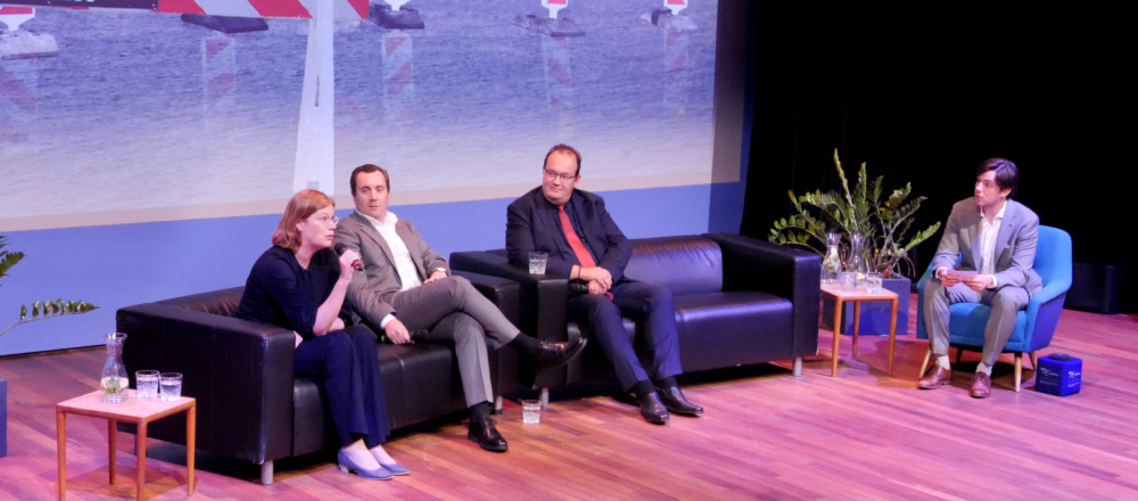
The panel discussion brought together perspectives from academia, policy, trade, and international business. Clingendael’s Dr Louise van Schaik, Head of Unit for EU & Global Affairs at The Clingendael Institute and one of the lecturers of the geopolitics course in RSM’s Executive MBA, asked what governments and companies should do to reduce geopolitical uncertainty. Peter Drake, Europe COO at French shipping and logistics company CMA-CGM reflected on how businesses can move from just-in-time to just-in-case supply chains. Dr Koen Berden, MD of consulting firm Trade Impact BV and senior fellow at ECIPE, spoke about connected developments such as Trump tariffs, Russian sanctions, and the emergence of alternative payment systems with broader shifts in global trade and economic security.
The message emerging from the discussion is that business resilience is no longer about responding to disruption after it happens, but about preparing for uncertainty in advance. Businesses should not try to predict the future better but rather need stronger scenario planning to be prepared for unexpected geopolitical disruptions.
More than supplier relationships
The panel identified that understanding supply chains requires more than merely having direct relationships with suppliers. Businesses need a deeper analysis of interdependencies, political systems, infrastructure needs, and strategic vulnerabilities across the supply chain. They said that diversification can help businesses become more resilient against heightened geopolitical risks.
Geopolitical awareness in strategic thinking
The need for geopolitical awareness is becoming an essential part of strategic thinking. Companies expanding into new markets, building resilient supply chains, or investing in emerging technologies must consider how global political and economic relationships shape the conditions in which they operate. As Dr Louise van Schaik explained, businesses that understand the geopolitical dynamics behind these changes are better equipped to anticipate risks, identify strategic opportunities, and make resilient long-term decisions.
The event Resilience during Geopolitical Uncertainty offered a timely and valuable reflection on how businesses can navigate an increasingly unpredictable global environment. The discussion reminded us that while uncertainty cannot always be avoided, it can be better understood, prepared for, and managed.
Advanced course on geopolitics
For business leaders, geopolitical literacy is becoming increasingly important. That has been acknowledged with the addition of an advanced course on geopolitics recently introduced into RSM’s Executive MBA. It was created with input from – and is delivered by – internationally recognised experts from Clingendael and aims to equip participants with analytical frameworks to understand geopolitical risks and their implications for businesses. Find out more about the Executive MBA programme at RSM. RSM also delivers geopolitical components in its customised executive education programmes for individual companies.