Article: Tuesday 26 October
Social referral programmes can improve conversion rates, build trust, and lower the cost of acquiring new customers.
Companies that use them for their digital platforms and apps have experimented with ‘uncertain rewards’ – a chance of a reward – but until now there was no clear evidence of what degree of uncertainty works best.
Recent research has found that the best results come when the person sending the invitation receives an uncertain reward, while the friend receiving the invitation receives a guaranteed reward. Prof. Ting Li of Rotterdam School of Management, Erasmus University (RSM), Dr Andy Tao Li of the University of Science and Technology of China, and Prof. Rodrigo Belo of the Nova School of Business and Economics published their findings in Can Reward Uncertainty Encourage Social Referrals? Evidence from a Large-Scale Field Experiment in the journal Management Science.
The idea of a social referral programme is simple: a current customer invites a friend, both sides receive a reward, and the friend may later become a new customer who invites others. The size of the reward can be variable and open to chance, like mystery gifts, lottery chances, random stocks, or prize draws. Some firms put this uncertainty on the sender, some on the recipient, and others on both, but there was no clear evidence for which design works best. Prof. Ting Li’s research helps companies design referral programmes that are more effective and better aligned with how senders and recipients respond to incentives.
“The key challenge is that referrals are inherently social. The sender considers not only their own reward, but also how the recipient will perceive the invitation. Likewise, recipients evaluate not only the reward itself, but also whether the offer feels fair, trustworthy, and worth accepting,” says Ting Li, who is Professor of Digital Business at RSM. “Our study highlights the importance of considering social relationships when designing business incentives. People don’t make decisions solely based on financial rewards; they also care about fairness, trust, and how their actions affect others.
“We wanted to understand where uncertainty helps and where it hurts. More specifically, should uncertainty be placed on the sender, the recipient, or both? This matters because a small change in reward design can strongly affect referral volume, customer acquisition cost, user engagement, and the long-term quality of referred customers.”
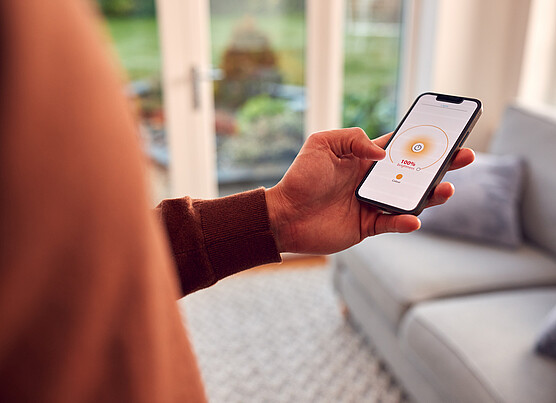
The researchers ran a large-scale randomised field experiment in the mobile app of a leading telecommunications operator, involving more than 160,000 users over two months. Users were randomly assigned to different designs of referral rewards.
Importantly, in the initial phase of the experiment, the certain and uncertain rewards had the same expected value. For example, a certain reward of 50 points was compared with a 10 per cent chance of receiving 500 points. The researchers could therefore examine the effect of uncertainty without simply increasing the expected value of the reward.
The researchers noted whether users shared referral invitations, whether those invitations led to successful referrals, whether newly invited users referred others, and whether these users became more engaged in the app through logins, retention, loyalty-point redemptions, and transactions.
They also conducted two online experiments to understand more about the roles of sender and recipient by measuring their sharing and acceptance intentions, as well as people’s psychological explanations such as guilt, fairness, curiosity, and social pressure.
The most effective referral design combines an uncertain reward for the sender with a guaranteed reward for the recipient, say the researchers. Across the experimental conditions, introducing uncertainty into the sender’s reward increased total referrals by 20.9 per cent. In contrast, introducing uncertainty into the recipient’s reward decreased total referrals by 12.3 per cent.
Ting Li says the reason is that senders and recipients respond to uncertainty in different ways. For senders, a guaranteed reward can make the referral feel too obviously self-interested, and bring discomfort or guilt. The sender is asking the friend to do something so that they can get a reward. However, when the reward is uncertain, the sender feels any benefit is like a gaming win, which reduces this discomfort and makes people more willing to share.
For recipients, uncertainty has the opposite effect. Recipients prefer a clear and guaranteed benefit. An invitation to an uncertain reward feels less valuable and less fair, which makes them less likely to accept.
Importantly, this behavioural difference is not simply about different risk preferences. While senders and recipients generally value guaranteed rewards more than uncertain rewards, the difference is that when the uncertainty is on the sender’s side their psychological discomfort is reduced, and this dominates the sharing decision.
In contrast, recipients face a different psychological concern. For them, uncertainty weakens their perception of fairness and social pressure, discouraging them from accepting invitations.
The researchers also found that the best design improved the quality of referrals as well as the volume of referrals. Customers coming in through the best designs – the ones that give an uncertain reward for the sender and a guaranteed reward for the recipient – were more likely to refer others, and showed stronger post-acceptance engagement. They stayed longer in the app, logged in more frequently, were more likely to redeem loyalty points, and made more transactions.
The researchers also examined when the effects of reward uncertainty were stronger. Larger rewards amplified the effects of reward uncertainty. The effects were also stronger when referrals were shared through private messages rather than public broadcasting channels, and users who had themselves joined through referrals responded more strongly than users from organic traffic.
“The main lesson is simple: do not treat ‘uncertainty’ as a single design choice,” says Ting Li. “It matters who faces that uncertainty.”
The findings suggest giving the sender a chance-based reward while giving the recipient a guaranteed reward. Based on the study and its managerial implications, companies can consider seven practical guidelines for designing referral programmes:
Uncertain rewards can motivate senders, but they can reduce recipients’ willingness to accept. If the business goal is referral acceptance and network growth, the recipient should receive a clear and guaranteed benefit.
The referral message should clearly state what the friend will receive. This helps the sender feel that the invitation benefits the friend, not just themselves.
If a sender is offered a chance-based reward, the probability and reward amount should be clearly communicated. For example, state that there’s a 10 per cent chance to receive 500 points.
Companies should examine whether referred users stay active, make purchases, redeem points, invite others, or generate long-term value. A referral campaign that brings many low-quality users may be less valuable than one that brings fewer but more engaged users.
The effects of reward uncertainty were stronger in private sharing channels such as one-to-one messages than in public broadcasting channels. Referral programmes may therefore benefit from making private sharing easy and prominent.
Users who joined through referrals were particularly responsive to this design, and can be targeted as potential senders because they already understand the referral process and may be more willing to invite others.
Referral programmes are social so if customers feel the offer is unfair, manipulative, or unclear, they may not participate. Companies should therefore test not only clicks and conversions, but also these psychological responses and customer sentiment.


Read the full article here: Can Reward Uncertainty Encourage Social Referrals? Evidence from a Large-Scale Field Experiment in the journal Management Science.



Science Communication and Media Officer
Rotterdam School of Management, Erasmus University (RSM) is one of Europe’s top-ranked business schools. RSM provides ground-breaking research and education furthering excellence in all aspects of management and is based in the international port city of Rotterdam – a vital nexus of business, logistics and trade. RSM’s primary focus is on developing business leaders with international careers who can become a force for positive change by carrying their innovative mindset into a sustainable future. Our first-class range of bachelor, master, MBA, PhD and executive programmes encourage them to become to become critical, creative, caring and collaborative thinkers and doers.