For four weeks in November and December 2025, students worked alongside Energie Samen – an overarching organisation for energy cooperatives in the Netherlands – to tackle how the Randstad’s electricity and heat transition can advance energy justice for all residents, particularly those most vulnerable to energy poverty and exclusion.
Every year, the Sustainability Grand Challenge capstone project pits students’ knowledge and creativity against complex, large-scale problems that need innovative solutions. Due to its interconnected causes, uncertain nature and the involvement of many stakeholders, the Grand Challenge requires approaches that can lead to transformative, systemic change.
Student Isabella Kroon explains, “It’s a culmination of the knowledge we had learned since September – from social-ecological systems to business sustainability strategies and ethics. This course gave us the opportunity to apply our theoretical learnings into real-life situations, engaging with stakeholders, analysing systems and collaborating with others to find a solution.”
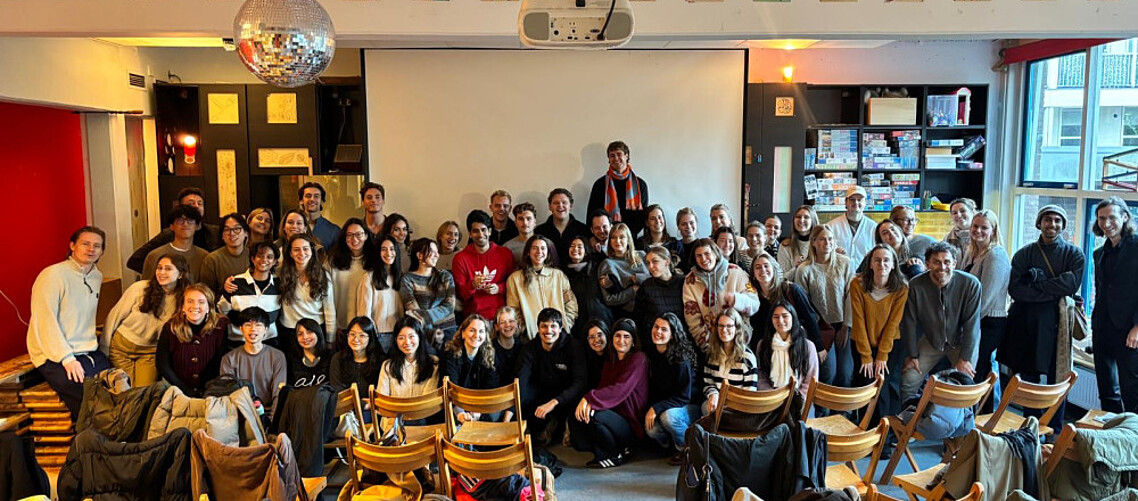
This year, under the guidance of RSM instructors Maarten Wubben and Thomas Bauwens, nearly 100 students teamed up to focus on the urgent challenges posed by the Randstad's green energy transformation. After four weeks of lectures, workshops, interviews, stakeholder analysis, system analysis and a fieldtrip to Energie van Rotterdam, the teams pitched their ideas to the professional jury of Ilonka Marselis (Energie Samen) and Ronald Franken (Energie van Rotterdam).
The challenge: balancing climate goals with economic justice
The Dutch Climate Act aims to make the country fully climate-neutral by 2050. A key part of achieving this goal is transitioning away from natural gas as a heating source, using electricity from renewable sources instead.
But as this transition happens, students and families with low incomes are at risk of being left behind or even further disadvantaged by rising energy costs. They’re more vulnerable to living in poorly insulated social housing or rental accommodation, where they’re limited in how much they can change or adapt their building’s infrastructure. Plus, many of the current solutions – like exchanging gas-powered cooktops for electric ones, or installing heat pumps – are an expensive investment, and costs for transforming the energy network are often passed on to consumers through higher delivery fees.
The winning ideas: turning local people into energy heroes
The judges selected four winning ideas in two categories: Most Applicable and Most Innovative. All the ideas put individuals and communities at the heart of the solution.
Most Applicable winners:
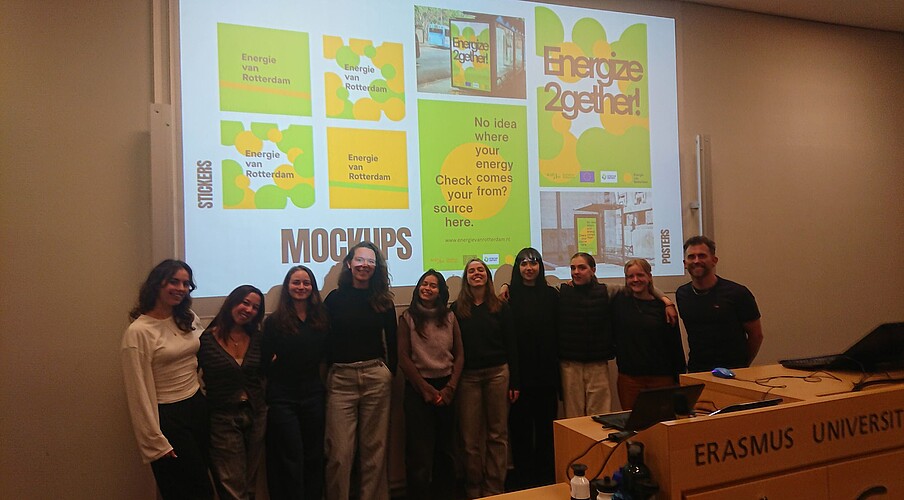
- Energize2gether, a novel visibility campaign for energy cooperatives, coupled with inspired campaigns to activate neighbourhoods and build volunteer ecosystems.
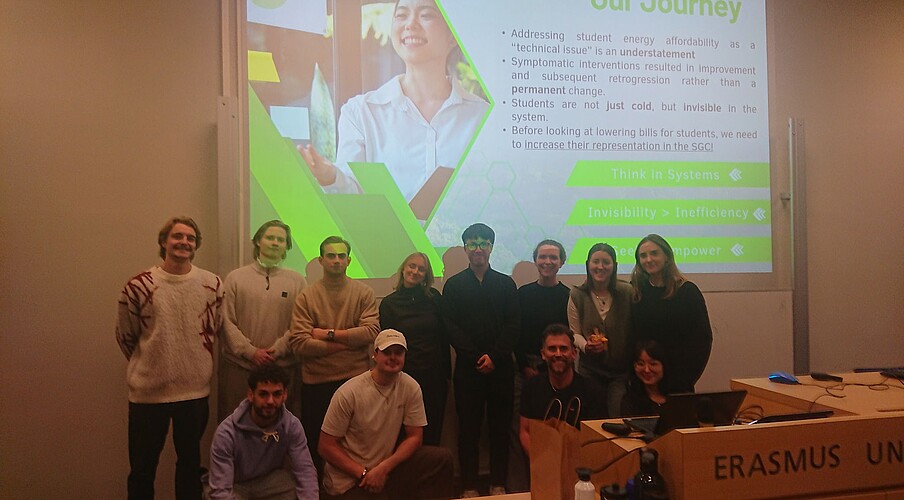
- Student Energy Programme, offering students – including those in poorly insulated, landlord-owned homes – a student-run energy helpdesk, student energy audits, and rights & remedies workshops.
Most Innovative winners:
- Energy Buddies and Demonstration Homes, plotted neatly on an online city map, allowing otherwise difficult-to-reach households with low incomes to find trusted neighbours, trained by energy cooperatives, for advice on subsidies, energy saving, and more.
- The Gamified Educational Project, which is not just an app but an integrated vision harnessing serious games to teach high-school students how to save energy and make their homes more energy efficient.
A lasting impact beyond the classroom
For student Isabella, the most impressive part of the challenge was the opportunity to interview diverse stakeholders, including staff from prestigious research organisations, energy cooperatives, and energy communities.
She says, “It was quite insightful to better understand the problems we were trying to solve from industry practitioners’ perspectives and experiences. I'm part of the Inclusive Energy Transition Erasmus Honours Programme, and I'm working on a project about student energy poverty with 75InQ, an NGO. The knowledge I gained from the course has already helped me better understand the nuances of the problem. I now have a vast understanding of the energy landscape in the Netherlands. Knowing that there's a lot of work to be done in at least the next 10 years, I may consider a career in the energy sector.”