Geopolitical tensions – when relations between countries worsen rapidly – are currently the main reason for drastic shifts and reductions in foreign investments. Sometimes tensions between two countries affect other countries that aren’t directly involved. These spill-over tensions have become increasingly disruptive – for example when the Dutch semiconductor companies ASML and Nexperia that found themselves at the centre of ongoing geopolitical tensions and trade disputes between the Netherlands, China, and the United States.
Relying on foreign investment
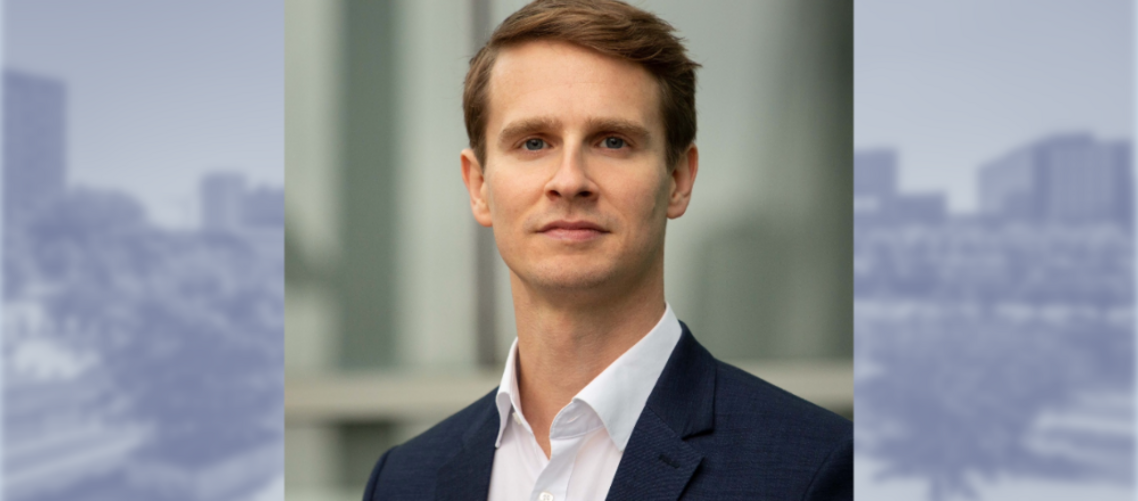
Dr Sabel explained: “Businesses are very cautious about their investments, given the tensions between the US and China, and between Russia and the West. Alarmingly, regional shifts and investment reductions have led to economic hardships in regions that heavily rely on foreign investment, and policymakers wonder how they can credibly attract foreign investment. My research will extend the understanding of tensions, examining when two-sided tensions create negative spillover effects for third, non-involved countries, which has been mostly overlooked in research on foreign investment.”
Ultimately, this research will enable policymakers to predict when design policy interventions might cause negative spillovers.
Measuring the networks
Being able to measure networks of geopolitical tensions will help to explain governments’ behaviours and international investments, and is essential for predicting future investment, migration flows, scientific collaborations, and stock market movements. Dr Sabel hopes to form a new theory to explain multilateral networks of geopolitical tensions, and create an open access database so that others can study geopolitical tensions. In addition to publishing his practical findings, he will create a teaching case for business and management studentsthat explains events of networked geopolitics that will be available through the Case Centre.
Useful for risk management
This new information will be useful as part of risk management and for setting the criteria for investment decisions for central banks, consultants, commercial banks, and multinational firms that rely on actions, rules, or agreements made between two countries. As a result, policymakers in particular can design better policy incentives to mitigate the negative effects of geopolitical tensions, ultimately improving countries’ policies for attracting foreign investment. The result is a much more expansive understanding of the mechanisms driving foreign investment as response to geopolitical relations.
Measuring national perceptions
How do you measure geopolitical moods and tensions? The answer is fascinating. It requires a network-based index for every country in the world, suing data that’s country-specific and time-specific. The data comes from sources that focus on national perceptions of other countries. This data is collected by the GDELT Project, the largest event data collection in the social sciences with more than four trillion machine-coded datapoints reported in print, broadcast and web news. It identifies events by looking for subject–verb–object triplets in media reports and machine-codes actors and events.
Each event record in GDELT includes the time and location of an event, who did what to whom, and the characteristics of the interaction – which could be cooperative or conflictual like demands or threats. GDELT identifies the role of the actors e.g., government, NGO, or business. Dr Sabel will look for political actors like governments, judiciary, opposition, and legislators.
For positive change
Understanding the conditions under which geopolitical tensions affect local businesses is important to society. The results will contribute to several UN priorities in the Sustainable Development Goals, by fostering economic growth (SDG 8) and strengthening supranational and municipal institutions (SDG 16). At the same time, Dr Sabel’s findings will be translated into information that can be used by practitioners. The measures and databases can also be used in scientific areas outside business and economics, such as political science and sociology.
The project will result in a teaching case incorporated into the courses that Dr Sabel teaches at RSM, explaining the current phenomena of networked geopolitics, such as trade and investment rerouting.