From principles to practices
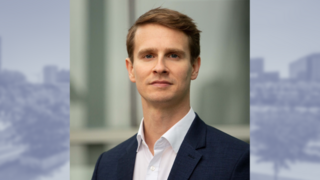
AI now shapes decisions and services that affect people's lives directly, from mental healthcare to social support. Governments and companies have responded by promoting principles such as fairness and transparency. Dr Van den Broek's project, AI ethics in the making: From principles to practices, starts from the observation that those principles tend to break down once they meet the messiness of daily work, and that the technology itself moves faster than the guidance written for it.
Rather than proposing another framework, the research looks inside organisations to see how AI ethics is actually managed on the ground, from the design of a system through to its use. Dr Van den Broek will study an AI vendor alongside two critical use cases, in municipalities and in mental healthcare, where professionals use AI in their interactions with citizens.
The findings are intended to help developers, implementers and policymakers translate general principles into responsible practice in the domains where the stakes are highest.
"We often assume that if we define the right principles for AI, organisations will naturally make the right decisions. But the real challenge begins when those principles meet the complexity of everyday work. This Veni grant gives me the opportunity to study AI ethics where it actually happens - inside real-world organisations - and I am excited to build this research programme at RSM, where expertise on AI, organisations and societal impact comes together."
Four more Veni grants at Erasmus University Rotterdam
Four colleagues elsewhere at EUR also received a Veni in this round.
Dr Ruben van Beesten will work on planning under uncertainty in the energy transition. Because wind and sunshine are unpredictable, the models that governments use to decide on energy infrastructure investment depend on how well that uncertainty is represented. His project develops an efficient way to identify which aspects of uncertainty actually matter for finding good solutions.
Dr Linda Dekker will research digital sexuality and sex education among young people aged 16 to 25, with particular attention to neurodivergent and LGBTQI* youth. Working with young people as co-researchers, the project combines interviews, online observation and a large survey to develop practical, inclusive advice for sex education.
Dr Giulia Napolitano will examine why stereotypes, and gender stereotypes in particular, are so resistant to counterexamples. Her project explores the possibility that their stickiness comes from their explanatory content rather than from the irrationality of the people who hold them.
Dr Kjell Noordzij will map what democracy actually means to citizens. Using group interviews, a large-scale survey and an experiment, and working with societal partners, the project develops evidence-based tools to promote and safeguard democracy.
About the Veni grant
Veni forms part of the NWO Talent Programme, together with Vidi and Vici, and is aimed at researchers who have recently gained their doctorates. Researchers are free to submit a subject of their own choosing, which is how NWO encourages curiosity-driven and innovative research. Selection is based on the quality of the researcher, the innovative character of the research, its expected scientific impact and the possibilities for knowledge utilisation.