
The media landscape has changed, and new players are reshaping how organisations are scrutinised, interpreted, and judged. Shifts in the political environment, alongside rapid technological developments, continue to accelerate this evolution. As a result, communication professionals increasingly operate in a strategic role, where interpretation, evidence, and judgement matter as much as messaging. Beyond engaging with mainstream media, they must assess signals from a growing number of stakeholders who operate their own media channels and determine how dialogue can lead to credible and shared outcomes. At the same time, a “fake news” industry that disregards journalistic norms and basic standards of veracity challenges organisations to distinguish facts from noise and act responsibly under pressure.
This programme is offered by Corporate Communication Centre BV. For more information about the legal structure of Rotterdam School of Management, Erasmus University, visit this page.

Media controlled by stakeholder groups stands as a critical yet often overlooked component in corporate communications. Serving as a parallel universe to mainstream media, these entities wield substantial power and influence during corporate and political crises. They operate under distinct rules of engagement, functioning both as allies and adversaries. Our comprehensive course provides you with a navigational map and a robust toolkit, offering insights on analysing and establishing effective dialogues with stakeholder media.
Delve into A-journal, peer-reviewed research sourced from the esteemed INSEAD Stakeholder Media Project, co-founded by our lecturer Mark Hunter. This course draws from benchmark studies, unraveling the methods essential for constructing persuasive, fact-based narratives.
Learn the art of constructing resilient, fact-based narratives capable of withstanding challenges from opposing stakeholders while attracting potential allies.
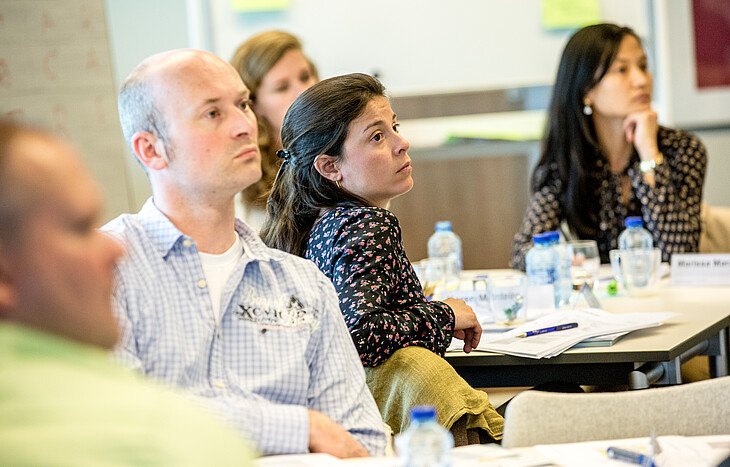



Media dynamics that shape reputation have become more diverse, more fragmented, and more consequential. Stakeholder-driven media and coordinated misinformation can amplify pressure, distort narratives, and accelerate crises. At the same time, organisations have more direct channels to engage stakeholders than ever before, yet many struggle to use them with credibility and consistency.
This masterclass examines these developments through best practices and current research, with a clear focus on the evolving role of communication as a strategic function. You will develop evidence-informed judgement to navigate stakeholder media environments and support responsible organisational choices under scrutiny.
By the end of the masterclass, you will be able to:
This course is for communications professionals who seek new concepts and tools for media and stakeholder engagement and management.
Particularly when you view communications as a strategic function. You benefit from the course if you are a:
The content of this course is highly relevant for communication professionals across industries. The theories, frameworks, timelines, and stakeholder maps are immediately applicable in daily practice. Mark is an experienced lecturer who remains closely engaged with the group throughout the course.
Karen Loos-Gelijns – Senior Staff Officer International Operations – Ministry of Defense
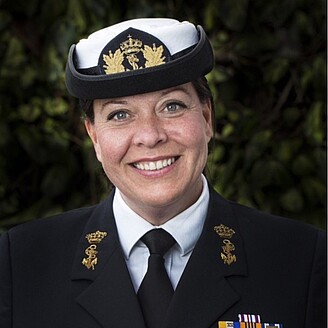
My experience with this masterclass was genuinely enlightening. Led by Mark Lee Hunter, the three-day programme offered deep insight into the dynamics of stakeholder-driven media. Through case studies and discussion, the course highlighted the growing presence and significance of stakeholder media in today’s media landscape, often shaping outcomes as much as — or more than — traditional media. As a communication professional, I particularly valued the emphasis on understanding how stakeholder media influences judgement and decision-making under scrutiny. The programme provided a more considered perspective on how to navigate this environment responsibly, grounded in research and real-world examples. It was an enriching experience that has strengthened how I approach complex stakeholder media situations in my professional role.
Brandon Palmer - Remarketing Partner - Tesla

Mark Lee Hunter is a recognized innovator as a scholar and media practitioner. He is a founder of the Global Investigative Journalism Network and the lead author of its manual for practitioners, Story-Based Inquiry, published by UNESCO in 2009 and currently available in 14 major and minor languages.

Susie Kuijpers is Global Manager External Communications and PR at Danone. Susie Kuijpers works for the specialized nutrition business of Danone. She is part of the team that is tasked with protecting and building the reputation of the early life nutrition and medical nutrition business and its brands.

TBD

The total costs for participation in the Navigating the Stakeholder Media Landscape course are €3,750.
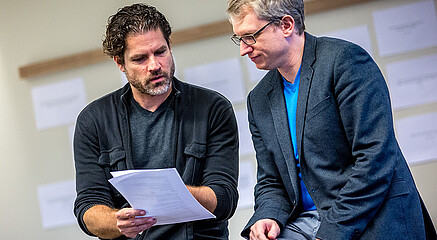
The programme takes place in the Bayle building on the Woudestein Campus of Erasmus University Rotterdam.
Our general terms and conditions apply when you register for an open programme. Please review them to learn more about our policies for cancellation, deferral and substitution.
The participant can be substituted by someone from the same organisation on the same course without extra costs.
This course can also be taken as part of RSM's part-time Executive Master in Corporate Communication, a flexible and accredited master programme for professionals.


Programme officer

Programme & Admission Advisor