Article: Friday, 9 October 2026
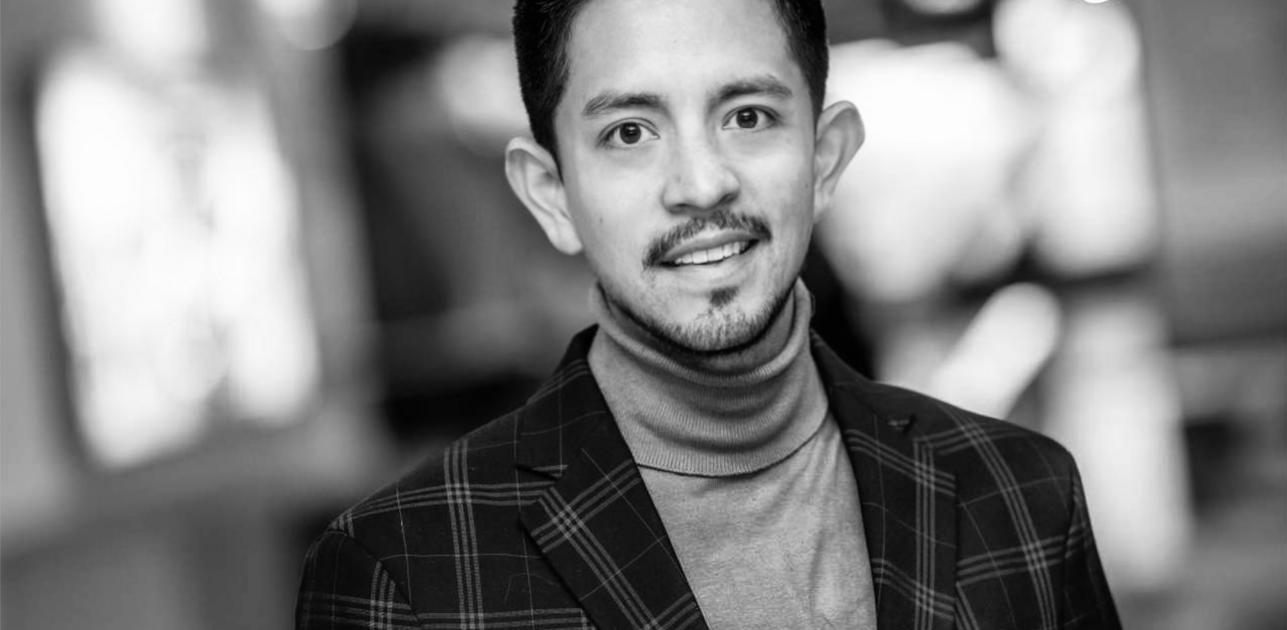
After finishing his PhD at Rotterdam School of Management, Erasmus University (RSM), Dr José Luis Gallegos Quezada is taking up a position as a postdoctoral associate at the prestigious Massachusetts Institute of Technology (MIT) Sloan School of Management.
We asked him all about his research, his experience of RSM's Department of People and Organisations and the Erasmus Research Institute of Management, ERIM (which supports RSM's PhD candidates throughout their journey), and his top tips for anyone undertaking a PhD.
My research is about the politics of automation. By that, I mean that I am interested not only in the technical question of what technology can do, but also in who gains from technological change, who bears its costs, and who gets a say in how it is implemented.
Much of my PhD research has focused on automation at the Port of Rotterdam. It is a particularly interesting setting because it is a highly unionised industry where workers have a collective voice and can negotiate the terms under which new technologies are introduced. My dissertation asks what happens when workers are not simply recipients of technological change but active participants in shaping it.
RSM and ERIM supported me in several important ways. I had opportunities to take courses outside Erasmus University and to spend time at other institutions, including a summer course at École des hautes études commerciales de Paris (HEC) and a research visit at Cornell University. Those experiences allowed me to learn from scholars elsewhere and build an international academic network around my research.
Just as importantly, I benefited enormously from the research community at RSM. Throughout the PhD, colleagues were generous with their time, willing to read my work, provide feedback, and include me in seminars and academic conversations. That combination of institutional support and an intellectually generous community gave me opportunities to develop my work and my profile as a researcher.
There is a strong continuity with what I have been doing, but also an exciting shift. I will continue studying how new technologies are deployed in workplaces and how workers and their representatives respond to them. The main difference is that I will move from studying automation in ports to studying artificial intelligence in healthcare.
Part of the research will involve a hospital in Massachusetts where AI technologies are being introduced and where workers are unionised. In that sense, my PhD has prepared me very well for the project. After several years studying how unions in the Netherlands and Europe engage with technological change, I have developed an understanding of unions as organisations that do not simply react to technology but can actively negotiate how it is designed, implemented and governed. At MIT, I can bring that perspective into a new sector and a new technological context.
I find it difficult to imagine a better environment for the questions I want to study. MIT has an extraordinary concentration of scholars working on technology, organisations and the future of work. I am particularly excited to work with Erin Kelly and Kate Kellogg, who will be the main faculty advisors for my post-doc.
More broadly, MIT Sloan has a community of researchers examining not only how technology changes work, but also how workers, organisations and collective voice can influence technological decisions. Those are precisely the questions that motivate my own research. So, for me, the post-doc is an opportunity to deepen the research agenda I developed at RSM while learning from a community that has been central to this field.
Having already studied in the United States, I wanted my PhD to give me a different academic experience. I was looking for an institution with excellent research, but I was also very conscious that a PhD is a four- or five-year commitment. I wanted an environment in which that experience could be sustainable, where work–life balance mattered, institutional support was strong, expectations around teaching were clear, and the rules of the programme were transparent.
I also wanted to be somewhere with a broader social mission. RSM seemed to combine those things with academic excellence. What has been particularly meaningful is discovering that many of the values that attracted me to RSM were not simply things written in a brochure. I encountered them in the everyday practices of the people around me.
Rotterdam has been my home for the past five years, so leaving is emotional. During my PhD defence, one of my committee members asked me about my positionality: what it meant for a Mexican researcher to spend years working with unions and workers in Rotterdam, and how that relationship had shaped my research.
Part of my answer was that, after a while, the line between researcher and research setting becomes a little blurry. I no longer feel that Rotterdam or the port is simply something I study. I feel part of the city, part of the port, and, in some small way, part of its history. I have come to feel like a Rotterdammer.
So I am leaving with some melancholy, but also a great deal of excitement. Wherever I go, I think I will carry an imprint of Dutch academia and of the Rotterdam mentality: roll up your sleeves, get your hands dirty, stay down-to-earth and humble, and work hard. Those values have become part of my own ethos as a researcher.
There was a very clear fit between my academic profile and the research they were looking for. During the selection process, they asked for my job market paper as well as the other papers from my dissertation, so they had the opportunity to look closely at the research I had developed at RSM.
My work has focused on technological change, workers and unions, and the MIT project brings those same themes into the deployment of AI in healthcare. Beyond that, I think the question of precisely why I was selected is probably better answered by them than by me!
I have always tried to make the research as practically useful as possible. One part of that has been translating research findings into concrete questions and strategies that unions can use when negotiating AI and other technologies. That includes identifying bargaining areas such as workplace surveillance, data governance, compensation and the choices between using technology to augment workers or automate their tasks.
I have also had the opportunity to translate some of this work into practice through an AI toolkit developed with the International Transport Workers’ Federation and through training activities with unions. For me, impact is not something that comes after the research. It is an important part of why I do the research in the first place.
If I could tell future PhD students at RSM one thing, it would be that it is okay to get lost.
Finding a research topic to which you can commit four or five years is difficult. Five years is, in fact, longer than any of my romantic relationships! My own PhD moved through questions about co-determination, working-time reduction, the gig economy, and eventually automation and workers’ voice.
What remained constant was not a particular theory or empirical setting. It was a sense of purpose. I knew that I wanted my research to have something to do with workers and with improving working conditions.
I think that matters because theories themselves are not always enough to sustain you through a PhD. Institutional theory, resource dependence theory, or the behavioural theory of the firm can give us powerful analytical tools, but it is our aspirations that give colour to the everyday work of research. Someone else might care deeply about increasing diversity, addressing climate change or another problem entirely. The important thing is finding the larger purpose that makes the work meaningful to you.
A PhD is long, and it is very easy to become absorbed by papers, conferences, administrative tasks and the pressures of academic life. Sometimes you need a physical reminder of why you started. I always had a poster of a worker by Fernand Léger hanging in my office. I would arrive in the morning, make my coffee, look at it and think: yes, this is why I do the work I do.
I hope future PhD students give themselves permission to get lost along the way, while keeping something close to them that reminds them why they wanted to take the journey in the first place.
Find out more about PhDs in Management at RSM


Science Communication and Media Officer
Rotterdam School of Management, Erasmus University (RSM) is one of Europe’s top-ranked business schools. RSM provides ground-breaking research and education furthering excellence in all aspects of management and is based in the international port city of Rotterdam – a vital nexus of business, logistics and trade. RSM’s primary focus is on developing business leaders with international careers who can become a force for positive change by carrying their innovative mindset into a sustainable future. Our first-class range of bachelor, master, MBA, PhD and executive programmes encourage them to become to become critical, creative, caring and collaborative thinkers and doers.