The Conference on 15 January was anchored by the UN Global Compact’s Forward Faster initiative, which featured the event on its website. It provides a framework for accelerating adoption and support of the 17 UN Sustainable Development Goals because only 17 per cent of the SDGs are currently on track for 2030. The Forward Faster initiative is a global platform for credible, ambitious corporate action aimed at guiding companies on where they can make the biggest, fastest impact for 2030. It focuses on five areas that underlie and interlink all the SDGs – Gender Equality, Climate Action, Living Wage, Water Resilience and Finance and Investment – to speed up their global adoption.
Go from words to deeds
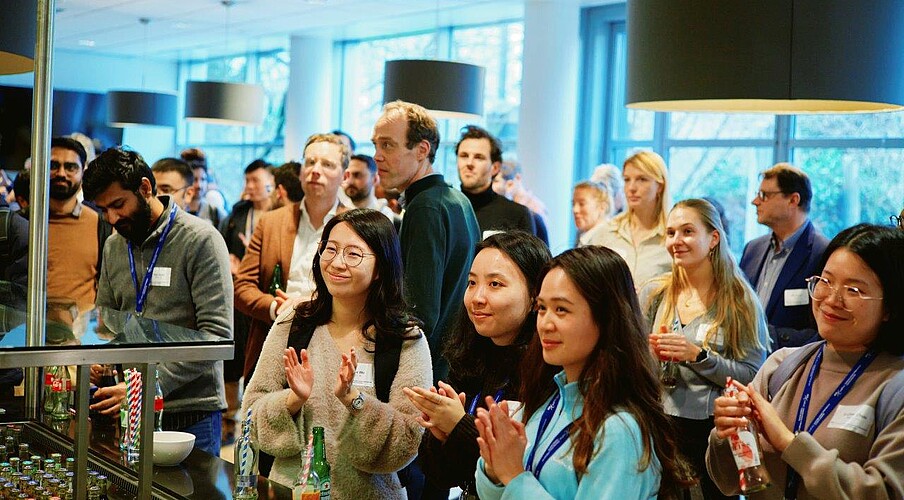
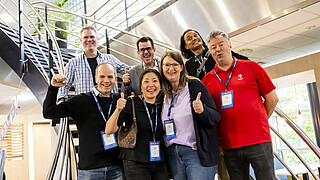
The 215 attendees of the RSM Transforming Business Conference on campus were eager to focus on moving from the ‘what’ to the ‘how’ of activating business transformation and accelerating the intended positive impacts for organisations committed to the SDGs. The buzz over morning coffee prior to the opening was palpable.
A task for future leaders
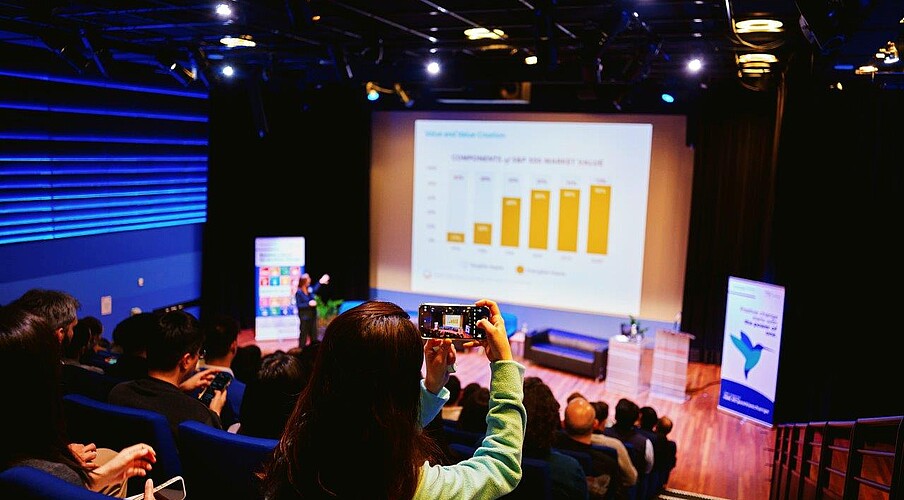
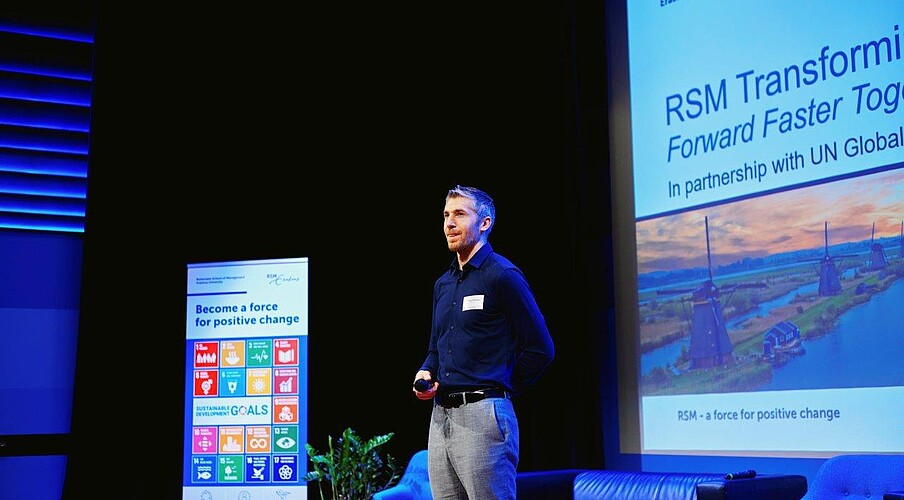
Launching the energetic day of debate and discussion was Jochem Kroezen, academic director of the Full-time MBA, followed by a keynote speech from Prof. Karen Maas from Impact Centre Erasmus. Her session ‘From Purpose to Impact: What are the challenges to move beyond words?’ reminded the audience that in order for organisations to make real positive impact, they must avoid the temptations of greenwashing and purpose washing by clearly defining their mission, context, and responsibilities. Importantly for the MBA students and alumni in the crowd, she noted that ‘Future leaders can help in this transition.’
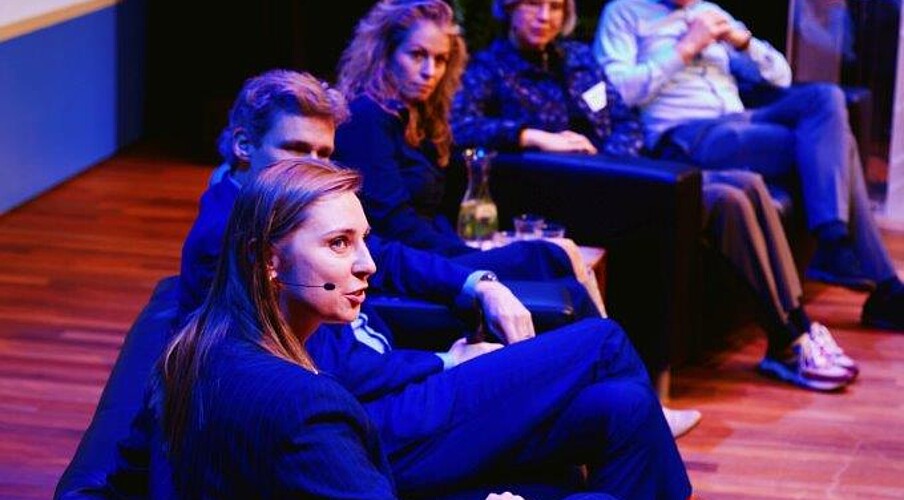
The keynote was followed by a panel discussion ‘Rethinking Business Models’ to take a broad look at the way companies can make the transition from profit-focused business models to models that generate positive impact. Panellists were Prof. Maas; Derk Loorbach of DRIFT; Merei Wagenaar, executive director of the UN Global Compact NL; Ankie van Wersch of Future Up; RSM alumna Alba Tiley of the Sustainability Link & Co.; and Stephan Roest of Borealis.
Not removed from reality
“I found the morning panel discussion very engaging,” said Lucas Ma, a current MBA student. “Sustainability is often discussed in a way that feels far removed from reality, but this session did a good job of bringing the topic closer to real life. The panel narrowed down theory into practical application, and it was interesting to see how they navigated different perspectives on the same topic in a realistic way, rather than presenting everything as ideal or perfectly aligned.”
Breakout sessions: from purpose to progress
Break-out sessions explored five key areas of the Dutch impact economy and how to turn purpose into tangible progress: energy, circular products, agriculture and food, urban futures, and transport and logistics.
Overloading the grid
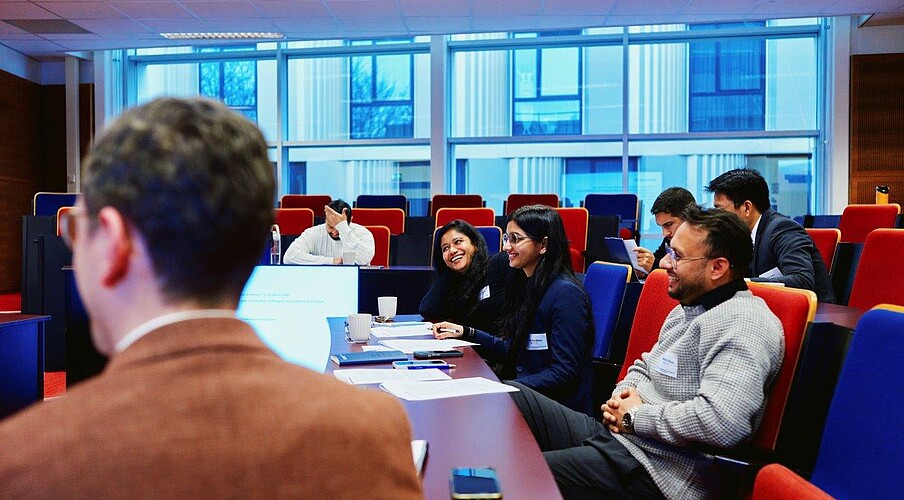
The challenges and complexities of the energy transition were explored through an interactive role-play. MBA candidate Aditi Gupta described how the role-play worked: “We worked on a case study that involved solving the problem of the grid in Rotterdam city being overloaded during peak hours. The grid operators had decided to cut off all EV charging stations during peak hours from 16:00 to 21:00. We had to consider the perspectives of all the different stakeholders involved. Once we came together with the intention of solving the problem collaboratively, we were able to reach a conclusion; however, we realised that in reality, most people do not want to engage in open discussions and work out these issues,” said Gupta, pointing to one of the greatest barriers to transitioning to an impact economy. The energy breakout session was led by Malou Kroezen of the Erasmus Centre for Energy Transition with Ruben Koster of FincoEnergies and Solange Hai of the RSM Case Development Centre.
Nature-positive alternatives
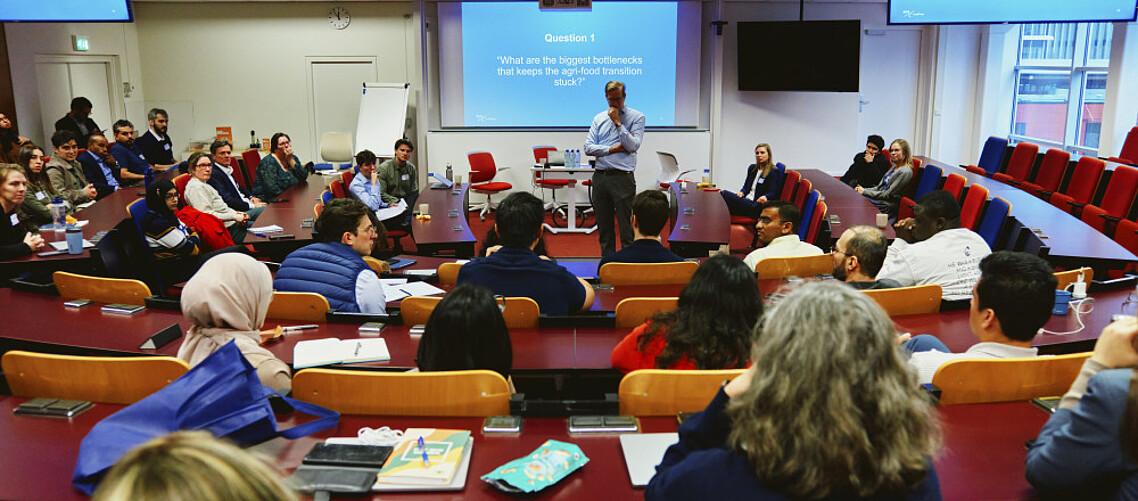
Today’s dominant food system is shaped by subsidies, untaxed pollution and fossil-resource advantages that reinforce growth and profit. In a session focusing on agriculture and food entitled ‘Seeds of systemic change,’ participants explored the transition to emerging regenerative, circular, and nature-positive alternatives, led by Derk Loorback of DRIFT and RSM PhD candidate Daan Peeters, with contributors Ylona Mak of Friesland Campina and Alexandre Bousquet of Hops & Co.
Overcoming circular hindrances
Participants who took part in the breakout session on circular models and materials discussed the hindrance factors to implementing circular business models and how to overcome them. The session was led by researcher Dr Piero Morseletto of RSM with contributors Melanie Wijnands of Bugaboo and Stephan Roest of Borealis.
The next technology
In the breakout session for transport and logistics, companies presented their challenges for participants to engage in a case-based discussion to brainstorm actionable solutions. The session was led by Prof. Rob Zuidwijk of RSM with contributors Donald Baan of Shipping Technology, Paolo Molinatti of PepsiCo, Pim Roest of AllChiefs and Paul Bakker of FincoEnergies. MBA student Sagar Chauhann said: “The most interesting and surprising suggestion for the next technology in sustainable transport and logistics was seeing how the industry is actively trying to shift transportation from conventional road transport to new approaches. What stood out to me was the use of biofuels, electricity, and more efficient ways of moving from one point to another in order to reduce overall carbon emissions. I found it especially interesting to see how these changes, whether small or major, can already create a positive impact.”
The urban future
Urban designer Els Leclercq of Design & Publics with contributor Lisanne Hofman of Rebel led the urban future session that explored challenges for wellbeing and quality of life in the built environment, and invited participants to design their own integrated approaches using an interactive set-up.
Showcasing local initiatives
After lunch, the conference took a deeper dive to showcase inspirational local initiatives that address systemic challenges by connecting perspectives from different sectors. The conference focused on getting to know the tools for building viable business cases, mobilising finance, and scaling real solutions across sectors and real-world applications in key impact areas like gender equality, climate action, living wage, water resilience and finance and investment. The solutions that came out of this session included:
Practical approaches for DEI
Practical approaches for a world in which diversity, equity, and inclusion (DEI) are being rolled back were covered in the deep dive session led by Dr Johannes Boegershausen of RSM with contributor Erika Harriford-McLaren of Blueyse, entitled ‘Beyond the backlash: strategies for being inclusive in turbulent times’.
Communicating climate impact
Reducing carbon emissions is a top priority for companies and policymakers, but it’s a challenge to communicate these efforts effectively. Dr Christophe Lembregts of RSM with contributors Eva Rood, Director of RSM’s Positive Change initiative, Ulrike Hahn of Imagine Human Nature and Brendan Moroso of Morningstar led the session ‘Climate action and communicating impact’.
Implementing a living wage
The session titled ‘Collaborative action: ensuring living wages across supply chains and sectors’ focused on the struggle for many businesses to implement effective living wage policies. It was led by Prof. Rob van Tulder of RSM with contributors Fiona Dragstra and Paulien Osse of WageIndicator Foundation, and Marjolein Scheerders of IKEA.
A meaningful seat at the table
Granting broader constituencies – workers, communities, ecosystems and future generations – a meaningful seat at the table was one of the emerging models discussed in the session ‘Redesigning decision-making for the future: reinventing governance power, commons, and long-term stewardship’. The session was led by Prof. Tine de Moor of RSM with contributor Dr Adrien Billiet of IÉSEG School of Management.
Economic realities
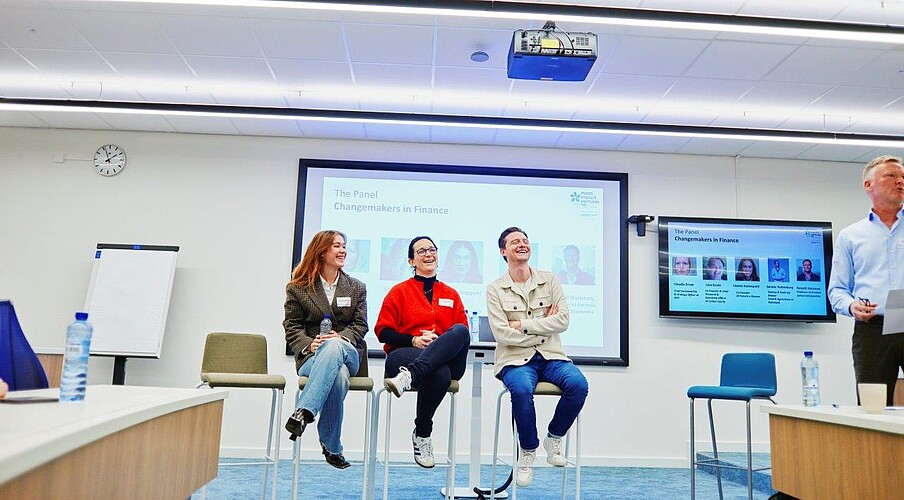
The current flux in finance, where sustainability imperatives collide with economic realities, and how a new generation can serve both prosperity and purpose was discussed in the finance and investment session. Titled ‘Finance at a crossroads: changemakers meeting the moment’, the session was led by Lila Frisher of Maas Impact Ventures, with contributors Sander Peltenburg of Rabobank, Claudia Kruse of APG Asset Management, Léonie Kennepohl of Female x Finance, Prof. Ronald Huisman of ESE EUR, Lara Koole of Carbon Equity, Josie Roberts and Niloofar Khanjani from Maas Impact Ventures.
MBA students organising for the future of impact
This RSM Transforming Business Conference is one of several events that include the Impact Summit and Impact Investing Competition. They aim to seek answers to hard and unsparing questions and tackle key issues and potential impacts, and they bring together Dutch and international business communities from every sector with leading academics and thought leaders, and RSM alumni and students.