Interview: Tuesday 3 November
Sustainable investing has never managed more money or attracted more doubt than it does right now. More than 5,000 investors controlling US$140 trillion have committed to investing sustainably, yet the field is caught between marketers who promise it will save the planet and critics who dismiss it as an expensive placebo. Somewhere in that crossfire, a more useful question gets lost: does it actually work, and how would we know?
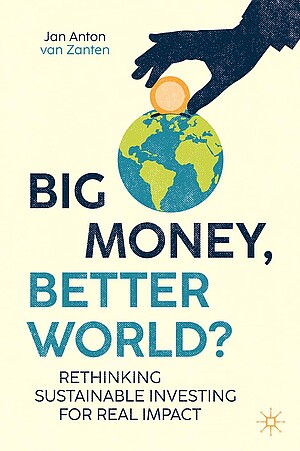
In his book Big Money, Better World? Rethinking Sustainable Investing for Real Impact (Palgrave Macmillan), author Dr Jan Anton van Zanten sets out to answer that question. As a visiting fellow at Rotterdam School of Management, Erasmus University (RSM) and Head of Sustainable Investing at Osmosis Investment Management NL, he combines academic research with industry experience. His conclusion: sustainable investing can make a limited but meaningful difference, but the way it is practised today has become too simple.
We spoke with Van Zanten about sustainable investing, why investors should think less like ‘hedgehogs’ and more like ‘foxes’, why ESG ratings can mislead, and what academic research says really works. Dr Emilio Marti, associate professor at the Business-Society Management department at RSM, adds insights from his own research.
Before we turn to your book: what is sustainable investing, and why does it matter?
Van Zanten: “Sustainable investing is a broad term that means different things to different people. In the book I compare it to Forrest Gump’s box of chocolates: you never quite know what you’re going to get, even if it’s all chocolate. I define it as using two levers – asset allocation (choosing which companies to invest in or divest from) and active ownership (engaging with the companies you own and voting at their meetings) – to support sustainable development, alongside financial returns.
“Sustainable investing matters because even though investors don’t themselves make products or deliver impact in the real economy, where they put their capital and how they use their voice as owners is one of the ways progress on environmental and social goals can be encouraged. But this is subject to fierce debate, and it is one of the main topics of the book: critics on one side call it a distraction from returns, while on the other, sustainable investing is argued to be too weak to matter.”
What did you want to show with this book, and how did your work as both an academic researcher and a practitioner help you make that case?
Van Zanten: “In sustainable investing, there is no shortage of good intentions or strong opinions. What I think is missing, though, is a grounding in sustainability science. That gap has led to a disconnect: many sustainable investing strategies are too simple for the complex challenges they aim to address. Working in the investment industry while also being embedded in academia, I see that disconnect from both sides. With this book, I wanted to help bridge it.”
How is the book structured, and what approach do you take?
Van Zanten: “The book moves through the promises, pitfalls and possibilities of sustainable investing. Throughout, I weave academic evidence together with stories from my own practice, to show what the evidence really says about investing for a better world.”
Let’s start with the pitfalls. You argue that sustainable investing has become ‘too simple’. What do you mean?
Van Zanten: “The goal of sustainable investing is ambitious, and it should be. But the tools that investors use to pursue it are quite simple. The book argues that sustainable investing today suffers from ‘hedgehog thinking’ and needs ‘foxy’ strategies. The idea comes from the Oxford philosopher Isaiah Berlin, who classified thinkers as either hedgehogs, who know one big thing (like curling into a ball of spines), or foxes, who are adaptable and deploy many different tactics.
“Many sustainable investing strategies behave like hedgehogs: they rally around one big idea, like portfolio decarbonisation (reducing the carbon footprint of the companies in a portfolio) or ESG integration (factoring environmental, social and governance issues into investment decisions), and treat it as the answer to everything. This is emotionally compelling, but it oversimplifies the complex reality of sustainable development.”
One tool behind ESG integration is the ESG rating. For many people, a high rating tells them a company is ‘good’. Is that what these ratings measure?
Van Zanten: “British American Tobacco holds a high ESG rating from many providers, even though its products are obviously harmful to human health. The reason is that ESG ratings do not evaluate how a company affects the world. Rather, they tend to gauge whether a company’s profitability is at risk from environmental, social, or governance issues.
“Sustainability really has two sides: how the world affects a company, and how the company affects the world. ESG ratings are built to capture the first, and they can be useful there. However, sustainable investing should also consider the second, and that's where they fall short. And this is not just one striking anecdote. In my own research, across 6,600 companies and four ESG data providers, the ratings barely distinguished the most harmful companies, or the companies providing solutions, from the rest of the market. So a high rating might tell you something about a company’s financial risks, but next to nothing about whether it is good for the world.”
If tools such as ESG ratings say little about how companies affect the world, what should investors base their strategies on instead?
Van Zanten: “Investors need a foxier approach. In practice, that means basing their strategies on sustainability screenings: assessments of how a company affects many sustainability goals at once, from climate and biodiversity to health, rather than relying on a single metric. Just as a doctor wouldn’t judge a patient’s health on blood pressure alone, an investor shouldn’t judge a company on its carbon footprint alone.
“These screenings should be grounded in sustainability science, so that they evolve as new evidence emerges, much like medical treatments do. And they should look ahead as well as at the present: not only how a company affects the world today, but whether it is credibly moving towards a more sustainable business model. That way, investors can back companies that already provide sustainability solutions, but also companies whose impact is negative today and that need capital to transform, such as a steelmaker investing in low-carbon production.”
What does research tell us about how investors can make a real difference?
Van Zanten: “The evidence points to two main channels. The first is the cost of capital: by steering money toward sustainable companies and away from harmful ones, investors can make it somewhat cheaper for green activities to raise money and more expensive for brown [environmentally harmful] ones. The effect is real but modest, and it grows the more investors pull in the same direction.
“The second is active ownership: voting at shareholder meetings and engaging in dialogue with companies. Here the research is encouraging. For instance, in a field experiment by Florian Heeb and Julian Kölbel, an index provider wrote to companies asking them to commit to a science-based climate target or be dropped from its climate indices. A year later, 21 per cent had committed, against about 16 per cent of companies that received no letter.
“Beyond these two levers, the work of my RSM colleague Dr Emilio Marti points to a subtler route to impact: shaping the wider field in which companies operate. Marti explains more about this below. The common thread is that impact grows with scale and coordination: the more investors act together, and the clearer they are about what counts as sustainable, the more difference they can make.”
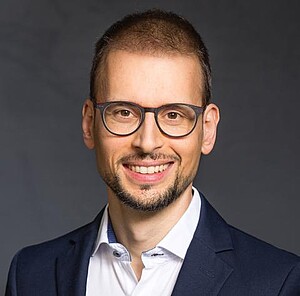
Emilio, the book builds on your research on 'field-building'. What is it, and what can investors achieve with it that they cannot achieve by focusing on individual companies?
Marti: “Most discussions of sustainable investing focus on either portfolio screening or shareholder engagement. Our research shows that investors can also use a third approach, which we call field building. Instead of working on one company at a time, investors can try to change the rules of the game for a whole industry. One way is to publicly call out harmful business activities, as the fossil fuel divestment movement did. Another is to help create standards that all companies are expected to follow, such as guidelines on how to report carbon emissions. Investors can also share what they know about companies with other investors.”
Back to the title of your book: Big Money, Better World. Considering all the research and your own experience, what is your honest answer?
Van Zanten: “Many people wish to see sustainable investing as a silver bullet that will solve the world’s toughest problems. But that bar is too high. Challenges like climate change, biodiversity loss and inequality are complex, and tackling them needs many different tools. Governments, which can set the rules for the whole economy, should take the lead on the systemic changes required. Still, having looked at the latest evidence, my answer is that sustainable investing can make a limited but meaningful difference: it can encourage companies to improve their sustainability performance, affect the cost of capital they face, shape the fields they operate in and push them towards long-term value creation. It is not a silver bullet, yet it can certainly help.”

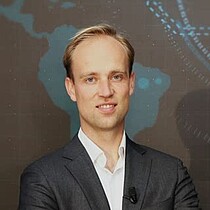
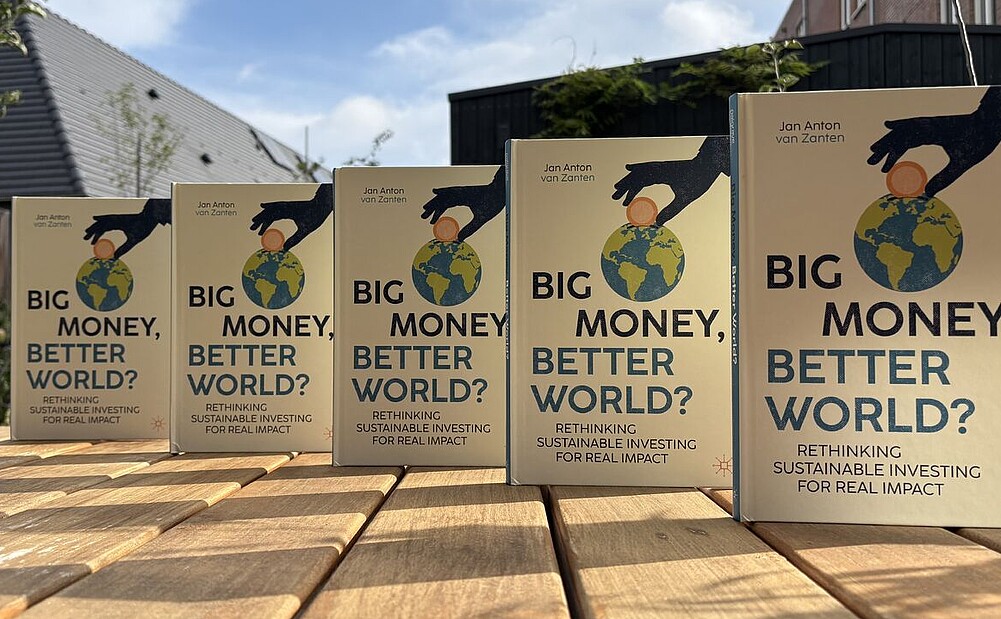
Jan Anton van Zanten's book, Big Money, Better World? Rethinking Sustainable Investing for Real Impact, is published by Palgrave Macmillan and available from the publisher and from other online book retailers, such as Amazon, Bol.com and Managementboek.

Science Communication and Media Officer
Rotterdam School of Management, Erasmus University (RSM) is one of Europe’s top-ranked business schools. RSM provides ground-breaking research and education furthering excellence in all aspects of management and is based in the international port city of Rotterdam – a vital nexus of business, logistics and trade. RSM’s primary focus is on developing business leaders with international careers who can become a force for positive change by carrying their innovative mindset into a sustainable future. Our first-class range of bachelor, master, MBA, PhD and executive programmes encourage them to become to become critical, creative, caring and collaborative thinkers and doers.